

The hormone that decides whether you burn or store
Insulin is a hormone that the body uses to help control glucose levels. Beyond its direct impact on glucose metabolism, insulin also plays a major role in body weight control by directing the body to use energy or to store it as fat.
Insulin’s Role in Fat Storage
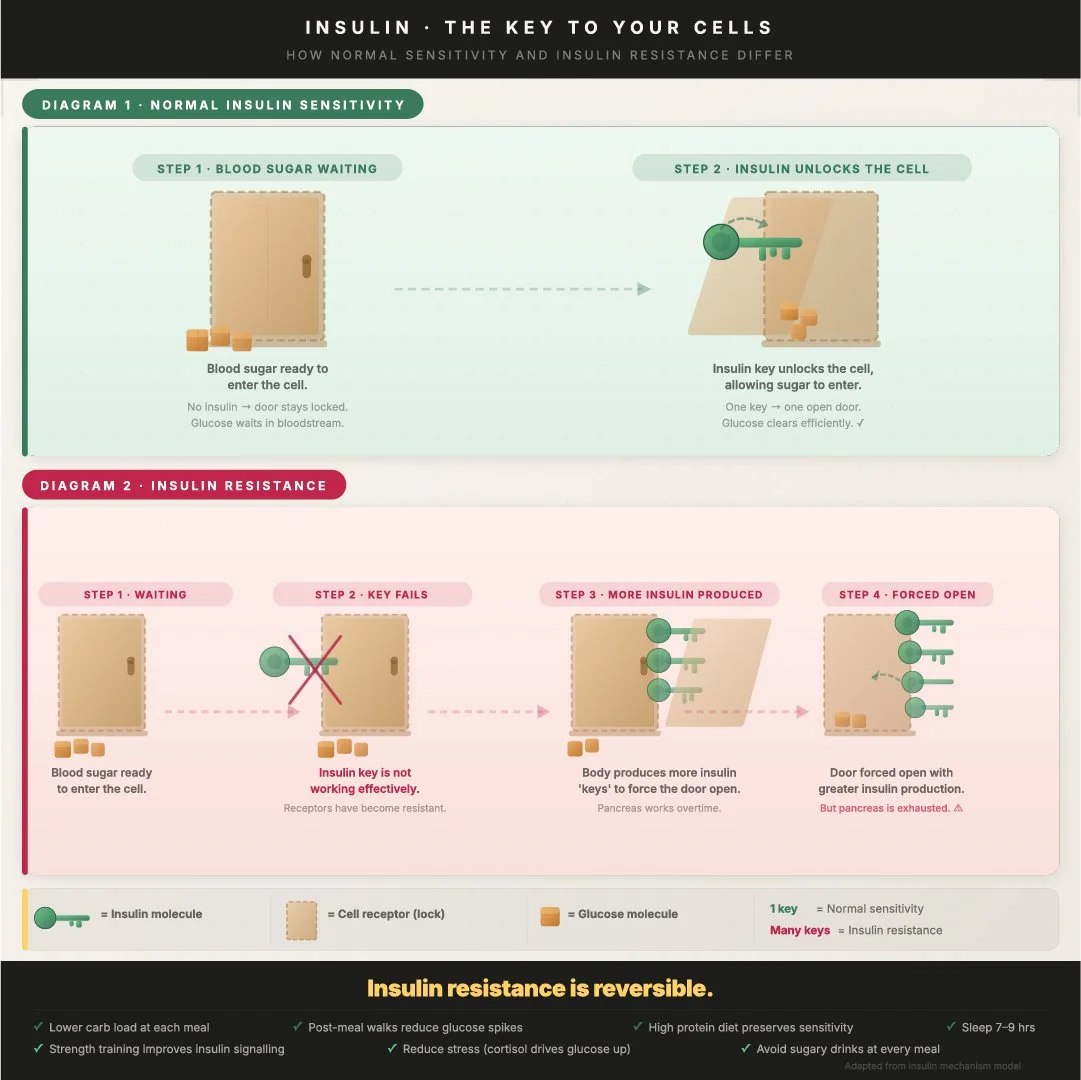
When blood glucose rises, the pancreas releases insulin. Insulin, like a key, binds to receptors on cells, which are like door locks. This triggers the movement of GLUT4 transporters to the cell surface, opening the door and allowing glucose to enter the cell. This process helps lower blood sugar by directing glucose from the bloodstream into cells for energy or storage.
When insulin is released in response to high glucose levels, it signals the body that energy is abundant, hence why insulin acts as a storage hormone, triggering cells to store energy in the form of glycogen for short-term storage, and in the form of fat for long term-storage.
High insulin levels signal to the body that energy is plentiful, which reduces the use of stored fat for fuel. As a result, when insulin remains elevated, it can make it harder to lose body fat, because the body is more likely to store energy rather than burn it.
When insulin levels are low, the body senses that incoming energy is limited, which triggers the release of stored energy. At that point, the body is better able to switch to burning fat for fuel..
The Damaged Lock (Insulin Resistance)
In order for insulin to have its effects, it needs to bind to the insulin receptor. When the insulin receptor has normal sensitivity to insulin, then the signaling system will work well.
In some people, the insulin receptor loses its sensitivity to insulin. This is like a damaged or blocked lock on a door – even when you have the right key, it’s still difficult to open the door. This is known as insulin resistance. With insulin resistance, the body’s cells don’t respond as well to insulin, so blood sugar isn’t lowered as effectively.”
There are a variety of possible causes of insulin resistance, including excess fat tissue in the body (especially around the organs), lifestyle factors, genetics, and environmental factors. Those with insulin resistance often have more than one of these factors working together.
Hyperinsulinaemia: The Hidden Problem
When the cells are experiencing insulin resistance, the body responds by producing more insulin, as it tries to move glucose into the cells. Long-term high insulin levels in the blood is known as hyperinsulinaemia.
In the early stages of insulin resistance, this extra insulin may be able to overcome the resistance of the cells. This is like a door lock that’s only a little bit damaged – you just need to use more keys and you’ll be able to force open the door. By producing extra insulin, the body is able to keep blood sugar levels under control.
That’s why standard blood tests often miss the early signs of insulin resistance. Screening tests for diabetes often test only glucose levels, but not insulin levels. They miss the cases where glucose levels are normal, but only because the extra insulin that the body has produced is able to overcome the insulin resistance and lower the blood glucose to normal levels.
Although a high level of insulin may be able to keep blood sugar levels from rising, the excess insulin also puts the body into energy-storage mode. In the long term, this can lead to weight gain, especially abdominal fat (around the midsection) and visceral fat (around the organs inside the body, which is the most dangerous type of fat for your health). Many people with high insulin levels have difficulty losing weight, even when they’re restricting their caloric intake, because the insulin is keeping the body in energy-storage mode rather than fat-burning mode.
Insulin resistance can contribute to increased hunger. , because when cells can’t take in glucose from the bloodstream effectively, they’re less able to use it for energy. . This can disrupt normal hunger signals, so even when there’s enough energy available, you may feel the need to eat more.”
This is why individuals with insulin resistance often find it very frustrating to lose weight. They may feel like their body is resisting their efforts to achieve a healthier body weight.
What You Can Do Today
If you suspect that you’re experiencing the early stages of insulin resistance, it’s a good idea to get a blood test called HOMA-IR. By comparing insulin levels with glucose levels, this test is able to determine whether your body needs to produce extra insulin to keep glucose levels normal. HOMA-IR is not a part of standard screening blood work, so you’ll need a doctor to order this test specifically.
Working to keep your blood sugar more stable can also help to keep insulin levels from rising. Every time you experience a high blood glucose spike, an insulin spike follows. By reducing the size and frequency of glucose spikes, insulin levels are also kept more stable. This helps the body enter a state where it can actually access the energy in fat tissue, rather than continuing to store more.
The NOVI curriculum contains many strategies for reducing glucose spikes, such as fiber shielding, buffering, sequencing, and the post-meal walk. By reducing glucose spikes, these strategies in turn reduce insulin spikes.
Insulin resistance can make it harder for the body to regulate blood sugar and store or use nutrients effectively. Over time, this can contribute to weight gain and make weight loss more difficult. Identifying the problem and taking action can help be an important step towards achieving your health goals.