Same meal, different time, dramatically different spike
When it comes to regulating blood sugar, most people focus on what to eat. But when you eat makes a difference too. The body’s glucose control processes are affected by the time of day, which means that the same meal can produce very different results when it’s eaten at different times.
The Circadian Rhythm
The body’s day/night rhythm is known as the circadian rhythm. During the evening, the body produces melatonin, a hormone that makes you feel sleepy. In the morning, melatonin levels drop and cortisol levels rise, which makes you feel energetic and ready to start your day.
But the circadian rhythm doesn’t just affect the brain – it affects the whole body. Virtually every organ and tissue throughout the body, including the pancreas, liver, muscles, gut, and even fat tissue, is affected by the circadian rhythm.
That’s why the circadian rhythm has such a powerful impact on your metabolism. In general, the body is optimized for digestion during the day rather than at night, and you can process glucose more easily during this period. Insulin sensitivity is highest in the morning (which means cells respond better to the insulin hormone when insulin sensitivity is high) and declines later in the evening, and the pancreas also secretes more insulin during the day. Because of this, the exact same bowl of rice can produce a larger blood glucose spike if it’s eaten at dinner, compared to breakfast or lunch.
While insulin sensitivity is generally highest in the morning, it’s often lower in the very early morning hours. As your body is preparing to wake up from sleep, there’s a surge of the hormone cortisol, which gives you the energy to get out of bed and start your day. Cortisol reduces insulin sensitivity, which is why many people with diabetes notice the “dawn phenomenon,” where their glucose levels rise around the time when they’re waking up. After the body processes this cortisol surge, that’s when insulin sensitivity will rise.
The Late-Night Supper Problem
In the two to three hours before sleep, insulin sensitivity is at its lowest (which means cells are not responding well to the insulin hormone when insulin sensitivity is low). At this point, the body is transitioning to its overnight tissue repair mode, and is no longer in an optimal state for eating and digesting food. If you eat during this window, then you’re more likely to experience a glucose spike.
Eating a large meal too close to bedtime can also disrupt sleep by increasing risk of indigestion and reflux. In turn, this affects your body’s glucose response the next day. A night of poor sleep has been shown to increase insulin resistance on the following day by 20-30%. So choosing to eat a late supper can lead to a glucose spike soon after the meal, and then it can also lead to higher glucose spikes the next day.
Late-night supper is deeply embedded in many APAC cultures, and this is an important time for many families to spend time together and strengthen their bonds. If your family usually has a late supper, you don’t have to skip this meal entirely. Instead, you can make choices that will minimize the impact on your glucose levels. For example, use the fiber gate by eating greens first. Add as much protein as possible to your supper, so it will have a smaller impact on your blood sugar levels.
After supper, try to take a walk for at least a few minutes. Active muscles are able to take up glucose without requiring insulin, which makes the post-meal walk particularly important after late meals. Even though the body is generally less sensitive to insulin at this time of day, taking a walk triggers the muscles to soak up some of the glucose, which can help to control the rise in blood sugar.
What You Can Do Today
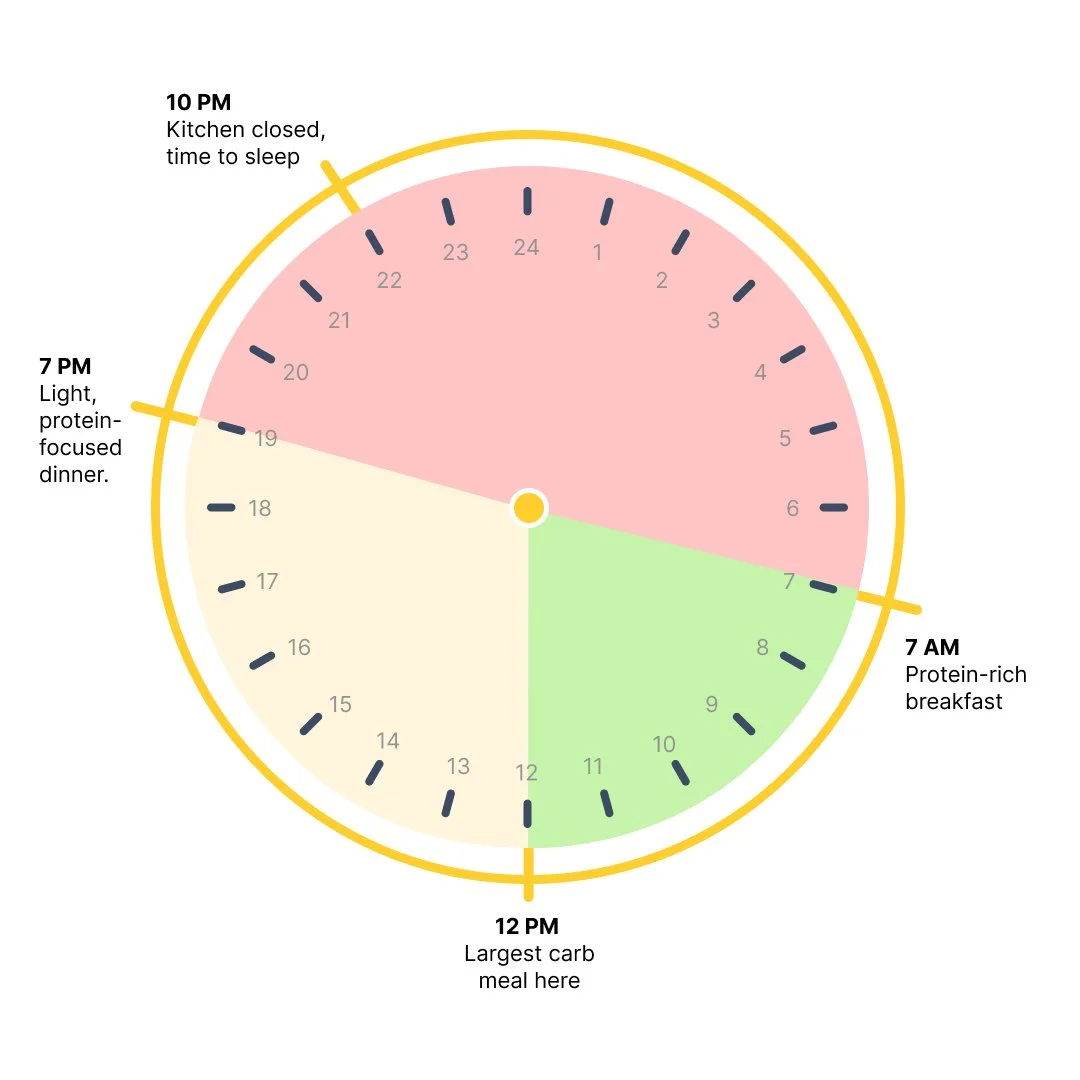
To help align your food intake with your body’s natural metabolic rhythms, try “closing the kitchen” at night. This means that you stop eating 3 hours before bed, so that you avoid eating during the window when your body’s insulin sensitivity is at its lowest.
For example, if you normally go to sleep at 11 PM, stop eating by 8 PM at the latest. After 8 PM, treat the kitchen like a business that has closed – you’ll have to wait until the next day to get any food there. Avoid going into the kitchen for a midnight snack. Once the kitchen has closed, it doesn’t open again until breakfast the next day.
This single habit can have a significant impact on your overnight glucose stability. It may also help to improve your sleep quality, which can have a significant impact on your glucose responses the next day.
You can also take advantage of your period of peak insulin sensitivity in the morning hours. Many people choose to skip breakfast, but this is actually the most favorable time to eat from a metabolic perspective, because morning is when your body is most sensitive to insulin. Make sure to include protein with your breakfast, as studies have shown that eating a protein-rich breakfast leads to smaller glucose responses at later meals that day.
The best time to have your most carb-heavy meal is lunchtime. At this point, your insulin sensitivity will still be relatively high, so your body will be better able to cope with carb intake. In the evening, when your insulin sensitivity is naturally lower, it’s better to focus more on protein and reduce carbs.
Aligning your food choices with your body’s natural metabolic rhythms can help to keep your glucose levels more stable and avoid damaging spikes.