Written by Sharon Gill, Senior Dietitian
Many people avoid sweet fruits like mangoes, bananas, grapes, and durian, assuming their natural sugar will spike blood sugar. But do whole fruits really affect our bodies the same way added sugars in desserts and sugary drinks do?
Fruits are far more than just sources of sugar.
Rather, they’re complex foods with inherent components which can aid in slowing down the rate of sugar absorption into the bloodstream. Additionally, they promote feelings of satiety.
Why Fruit Sugar Behaves Differently
Fruits contain natural sugars, primarily fructose, glucose, and sucrose. However, these sugars exist within an intact cellular structure that also contains water, fibre, vitamins, minerals, and beneficial plant compounds.
The Fibre Speed Bump
Think of fibre as fruit's natural speed bump. Whole fruits possess an intact cellular matrix rich in dietary fibre. This physical structure slows mechanical digestion and delays gastric emptying, ensuring glucose is absorbed gradually rather than flooding the bloodstream.
As a result, eating an apple or a banana typically produces a much slower and more controlled rise in blood sugar compared with consuming an equivalent amount of sugar from processed foods. This is one reason why looking at sugar content alone does not tell the whole story.
Which Fruits Have More Sugar?
Some fruits naturally contain more sugar per serving.
Higher-sugar fruits include:
Mango: approximately 45g per whole fruit
Durian: approximately 31g for three seeds
Grapes: approximately 23g for 6–8 grapes
Cherries: approximately 18g for 6–8 cherries
Pear: approximately 17g per fruit
Watermelon: approximately 17g per slice
Banana: approximately 14g per medium fruit
Orange: approximately 12g per fruit
Apple: approximately 10g per fruit
Meanwhile, several fruits contain relatively less sugar.
Lower-sugar fruits include:
Avocado: approximately 0.5g per half fruit
Cantaloupe: approximately 5g per slice
Dragon fruit: approximately 5g per half fruit
Guava: approximately 5g per fruit
Strawberries: approximately 5g for 3–5 berries
Kiwi: approximately 6g per fruit
Papaya: approximately 6g for half a fruit
Blueberries: approximately 7g for 6–8 berries
Chinese pear: approximately 9g per fruit
However, classifying fruits as "good" or "bad" based solely on sugar content can be misleading.
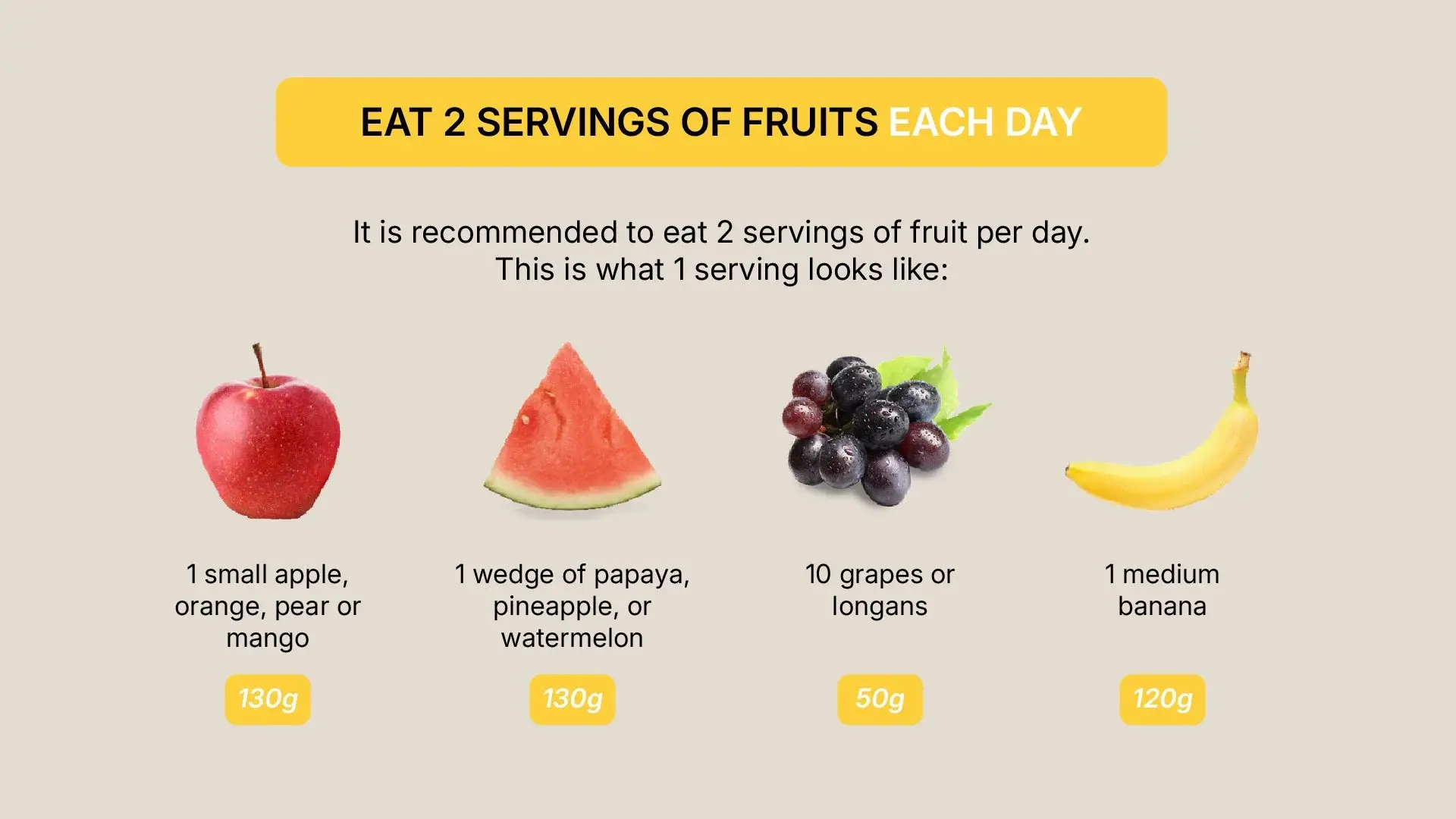
Instead, being aware of the recommended portion sizes of the different fruits is helpful in ensuring the quantity being consumed is within the recommended range. Based on the Singapore Health Promotion Board’s My Healthy Plate recommendation, 2 servings of fruits daily is recommended.
Eat Your Fruit, Don't Drink It
How you consume your fruit matters. Juicing and blending break down the fruit's native cellular structure and reduce the mechanical effects of fibre. When the fibrous matrix is disrupted, the natural barrier that slows glucose absorption is diminished. As a result, fruit juices and smoothies can produce much faster rises in blood sugar than eating the fruit whole.
It is also much easier to consume several servings of fruit in a single glass than it is to eat the equivalent amount of whole fruit. So whenever possible, eat your fruit rather than drink it.
Recommended Reading: The Fibre Cage
Volume Matters More Than Avoidance
Many tropical fruits have developed a reputation for being "too sweet." Yet most traditionally stigmatised tropical fruits actually fall within the low-to-medium glycaemic index range.
The secret lies in the portion size, for example:
Half a medium mango instead of an entire fruit
One small banana instead of an extra-large one
A moderate serving of grapes (six to eight medium grapes) rather than eating directly from a large bunch
Adjusting the physical portion size allows you to enjoy these fruits while minimising large glucose excursions. In other words, the answer is not complete avoidance but mindful portions.
Whole Fruits May Help Protect Metabolic Health
May Protect Against Incident Type 2 Diabetes
A recent large cohort study of 79 thousand participants showed that increasing the quantity and consistency of fresh fruit consumption might offer a protective shield against the onset of Type 2 diabetes, particularly for those with normal glucose tolerance, though this effect appears less pronounced in individuals already living with prediabetes. The protective effects are likely due to a combination of fiber, antioxidants, micronutrients, and beneficial plant compounds working together.
Fruit Supports Satiety and Weight Management
Fruit is also surprisingly helpful for appetite regulation. Most fruits have high water and fiber content. Together, these components increase the volume of food in the stomach and mechanically stretch the stomach wall. This process stimulates natural fullness hormones, including GLP-1 and Peptide YY (PYY), which help signal satiety and reduce hunger.
Because whole fruits are highly satiating, they can help prevent overall calorie overconsumption and may curb cravings for highly processed sweet foods later in the day.
Avoiding Fruit Can Lead to Nutritional Gaps
Restricting fruit unnecessarily can also mean missing out on valuable nutrients.
Different fruits provide different health benefits:
Bananas are rich in potassium, an important mineral for blood pressure regulation and cardiovascular health.
Mangoes provide vitamin C and carotenoids that support immune and eye health.
Berries contain antioxidants and anti-inflammatory compounds.
Guavas are exceptionally rich in vitamin C.
Pineapples contain bromelain, an enzyme with anti-inflammatory properties.
Avocados provide healthy fats and fibre that support heart and metabolic health.
No single fruit contains every nutrient. Eating a wide variety of fruits allows you to benefit from their different protective compounds.
Don't Fear Fruit Sugar
The sugar in whole fruit behaves differently from added sugars found in ultra-processed foods. Fibre slows absorption, water increases fullness, and fruits deliver vitamins, minerals, antioxidants, and beneficial plant compounds that support long-term health.
While it is true that some fruits naturally contain more sugar than others, this does not make them generally unhealthy.
All fruits can be enjoyed within recommended serving sizes. Rather than avoiding certain fruits, focus on variety, portion awareness, and eating fruits in their whole form.
And when it comes to fruit, there is a rule that often works well: The more colourful your fruit choices, the better.
About the Author
Sharon Gill is a Senior Dietitian with Novi with over 7 years of clinical experience. She is a member of the Malaysian Dietitians’ Association and a Registered Dietitian with Malaysia’s Ministry of Health. She managed chronic diseases and specialist care at Kuala Lumpur hospitals before bringing her expertise to digital health.