
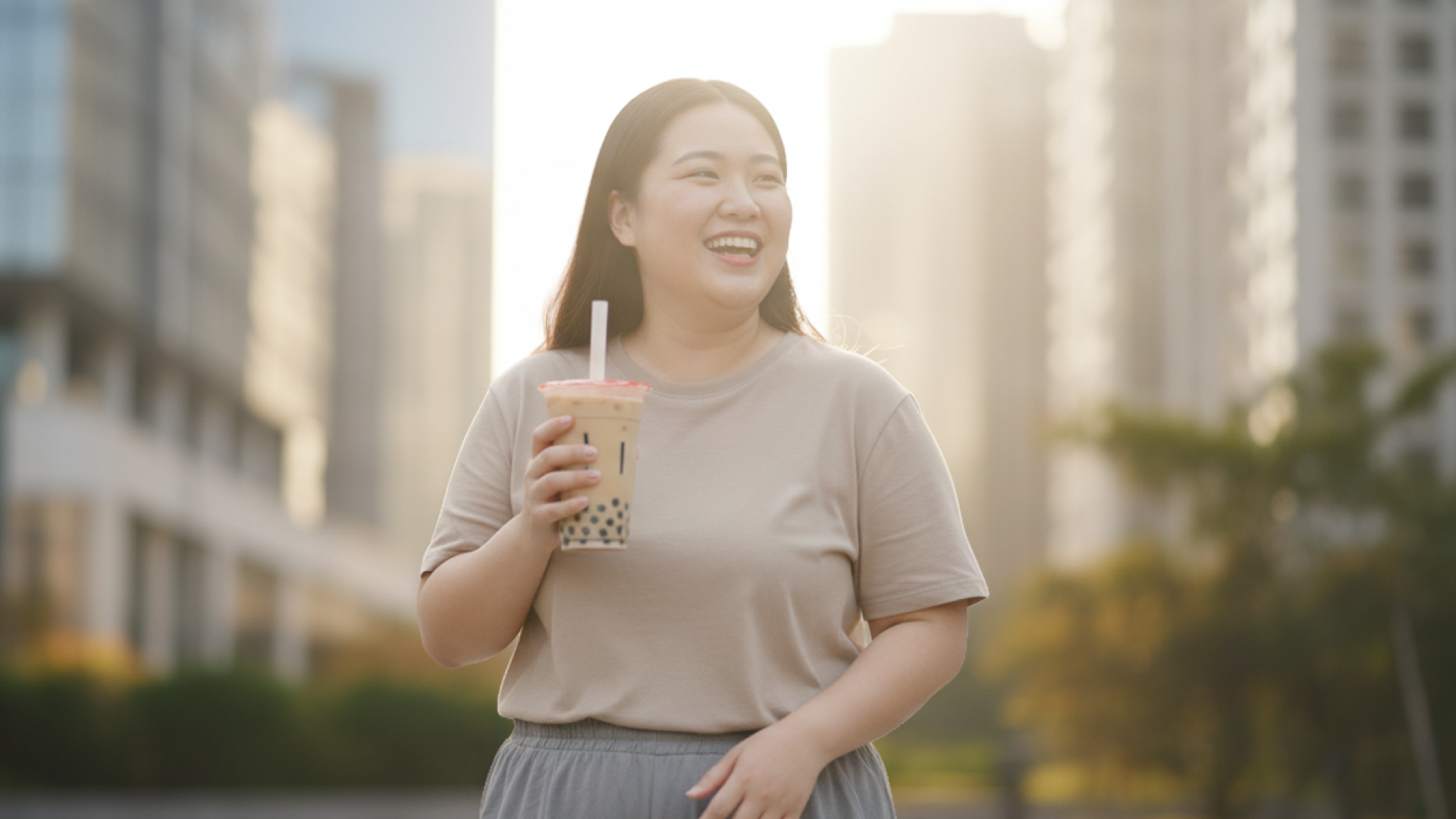
Why sugary drinks place a high metabolic demand on your body
You don’t chew sugary drinks. You drink them. And that makes a difference.
The Absorption Speedrun
When you eat solid foods, they require some effort on your part. First your teeth crush them, then your stomach churns. Fiber also slows things down.
Sugary drinks? Almost no delay.
There’s no fibre cage. No thick gel barrier. There is almost no slowdown as the liquid enters the small intestine where glucose is absorbed into your bloodstream.
This creates a rapid rise in blood sugar.
Your pancreas produces insulin in response, which is a hormone that assists glucose moving from your blood into your cells. The quicker the increase in your blood glucose, the quicker your pancreas must respond.
More concentrated sugary drinks usually cause a bigger and faster spike in blood sugar because they contain more total carbohydrates and are absorbed quickly in liquid form.
The APAC Sugar Landscape
In many Asian urban areas, the consumption of sugar sweetened beverages is a regular and culturally embedded habit.
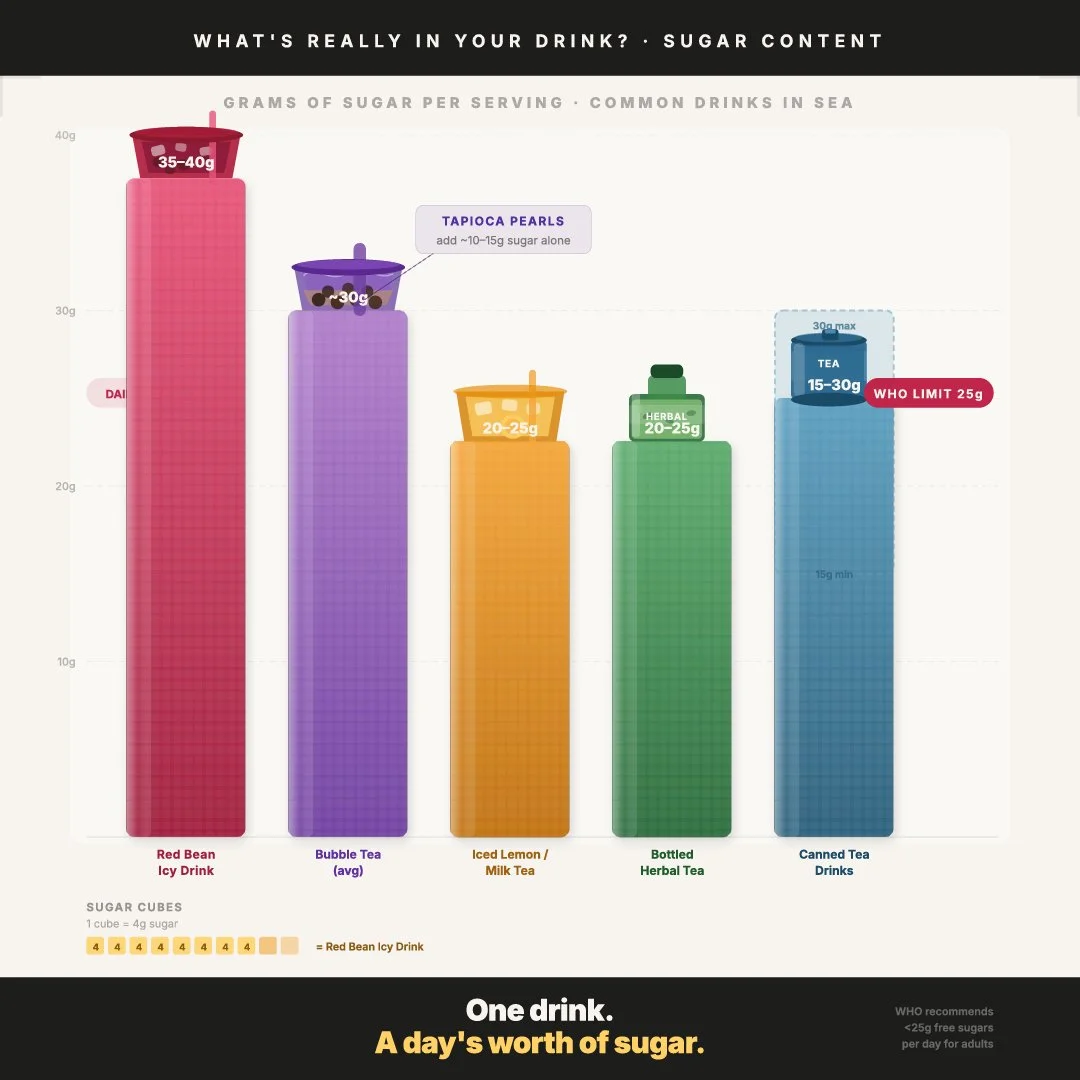
Estimated sugar per serving:
Bubble tea: ~30g
Iced lemon tea or milk tea: 20–25g
Red bean icy drink: 35–40g
Bottled herbal tea: 20–25g
Canned tea drinks: 15–30g
For context, the World Health Organization recommends limiting added sugar intake to about 25 g per day to achieve additional health benefits.This equates to about 6 teaspoons. A single sugar sweetened beverage can exceed that amount.
And here’s the tricky part.
At many popular bubble tea chains, “less sweet” often still means around 50% sugar. Although the sugar amount has been reduced, it is still not a small amount
The Dose–Response Relationship
Another important concept to understand is the dose-response relationship. It describes the relationship between the amount of a substance you consume and the strength of the effect.
With liquid sugar, there is a clear dose-dependent effect The higher the concentration of sugar, the bigger the rise in blood glucose.
A lightly sweetened tea may increase your blood glucose slightly. A heavily sweetened brown sugar milk drink may cause blood glucose to soar.
The Sweetener Alternative
Some natural non-caloric sweeteners such as stevia and monk fruit (lo han guo) provide sweetness but do not raise your blood glucose. They are made from non-sugar plant glycosides. Therefore, glucose levels remain relatively flat when they are consumed without carbohydrates from other sources.
If you drink sweet beverages regularly, switching your default sweetener may remove a major source of volatility.
Gradual Swaps
You do not need to go from 100% sugar to zero overnight. Consider these incremental steps:
100% → 50%
50% → 25%
25% → no added sugar
Drink unsweetened tea.
Opt for black coffee kosong.
Try sparkling water with citrus.
Choose water first.
These small changes compound over time.
What You Can Do Today
Before your next drink order, pause. Request one level less sweet than what you normally get. That’s it.
It’s not about eliminating sweet treats or giving up bubble tea entirely. It’s about reducing the metabolic strain placed on your body.