How your freezer and your clock change the chemistry of food
Starches are long chains of sugar molecules.
When you eat starch, an enzyme called amylase breaks it down into sugar. That’s why starchy foods such as rice and bread can raise your blood glucose
There are ways to reduce the impact that starch has on your glucose levels. One method is to cool starchy foods after they’re cooked.
This may be effective because it triggers a process known as retrogradation.
Retrogradation
When starch is cooked, the molecules absorb water and expand. This makes the starchy food easily broken down by amylase in the digestive tract. The fast digestion causes fast absorption, leading to greater spike in your blood glucose.
When starch is cooled after cooking, the molecules re-crystallize and become more tightly packed.
This process is known as retrogradation and form resistant starch.
Because its molecules are more tightly packed, resistant starch can’t be broken down by amylase. So when this type of starch enters your small intestine, it can’t be digested and absorbed, and leaves a low impact on your blood sugar.
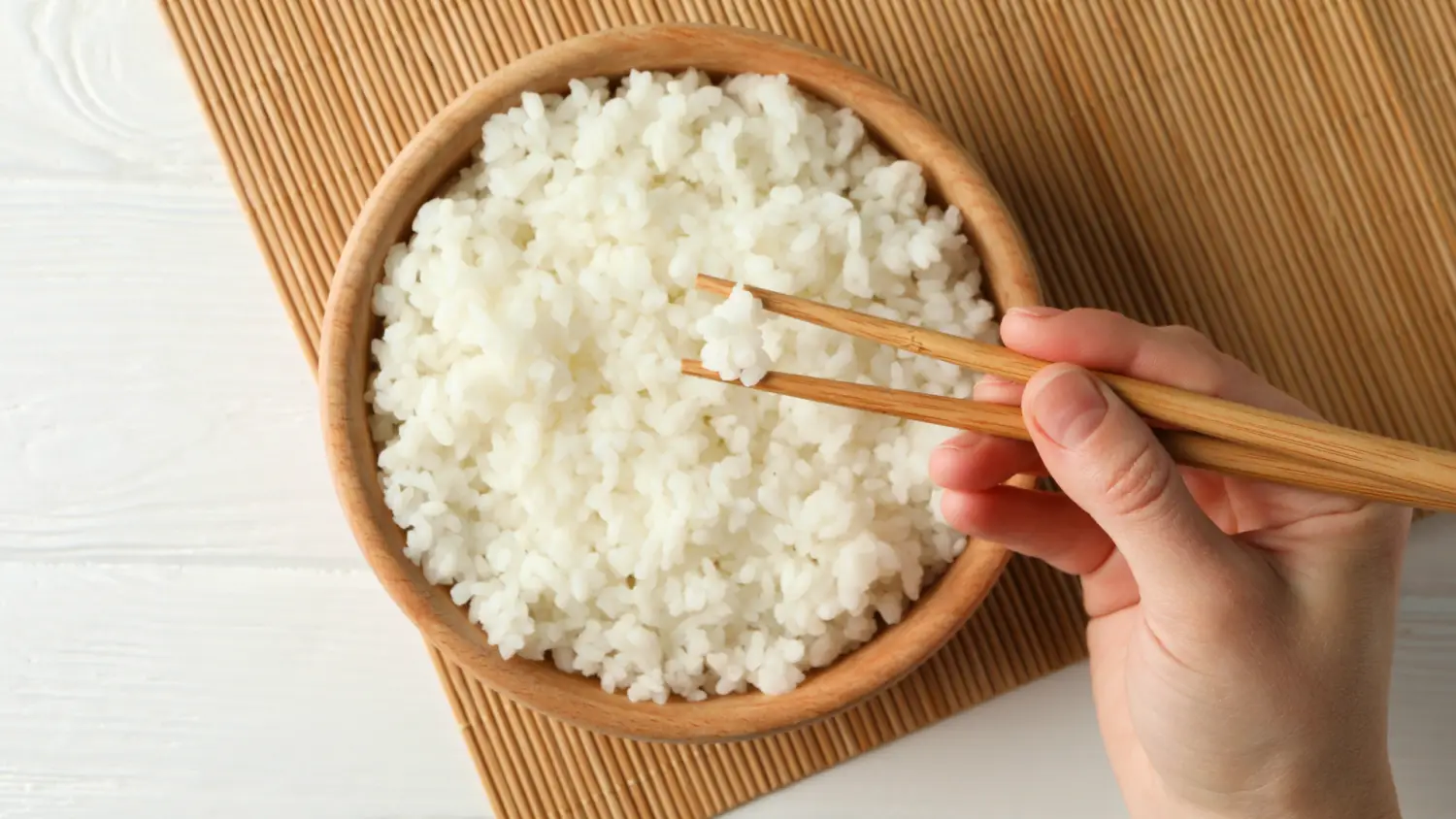
The resistant starch content of foods like rice, pasta, and bread is increased when they’re cooled after cooking. Research has shown that cooling white rice can double the amount of resistant starch that they contain. The amount of resistant starch produced differs from food to food and the way they are prepared.
Cooling cooked starches can modestly reduce their impact on blood glucose levels. This makes foods such as chilled soba noodles or onigiri appealing options for those looking to better manage post-meal glucose responses. However, it’s important to note that the current evidence is promising but should not be taken as a panacea.. While this approach can be a helpful strategy, overall carbohydrate intake still plays a key role in determining blood sugar levels.
But what if you prefer your rice hot?
The Reheating Truth
Once starch has cooled and become resistant starch, reheating doesn’t fully reverse the process. In fact, some research has shown that cooled white rice which has been reheated contains even more resistant starch than white rice that’s still cold.
The same effect also occurs for other types of starchy foods. For example, toast made from bread that has previously been frozen will contain more resistant starch than toasting from fresh.
Gut Health Bonus
Besides its reduced impact on blood glucose, there’s another bonus to resistant starch. Because amylase can’t break it down, it passes through the small intestine and enters the colon (large intestine). There, it acts as a food source for certain beneficial bacteria
When these bacteria process resistant starch, they produce compounds called short-chain fatty acids, such as butyrate and propionate. Over time, these compounds may improve insulin sensitivity.
As such, resistant starch may help to lower the impact on your glucose responses and also give you a compounding metabolic return by feeding beneficial bacteria in your gut.
What You Can Do Today
The glycaemic response is the amount that your blood sugar increases after eating a particular food. Overnight refrigeration of white rice and freezing white bread before toasting modestly reduces the glycaemic response
This small kitchen habit may offer metabolic benefits, particularly when paired with mindful control of carbohydrate portion sizes