How to eat well when you don’t control the kitchen
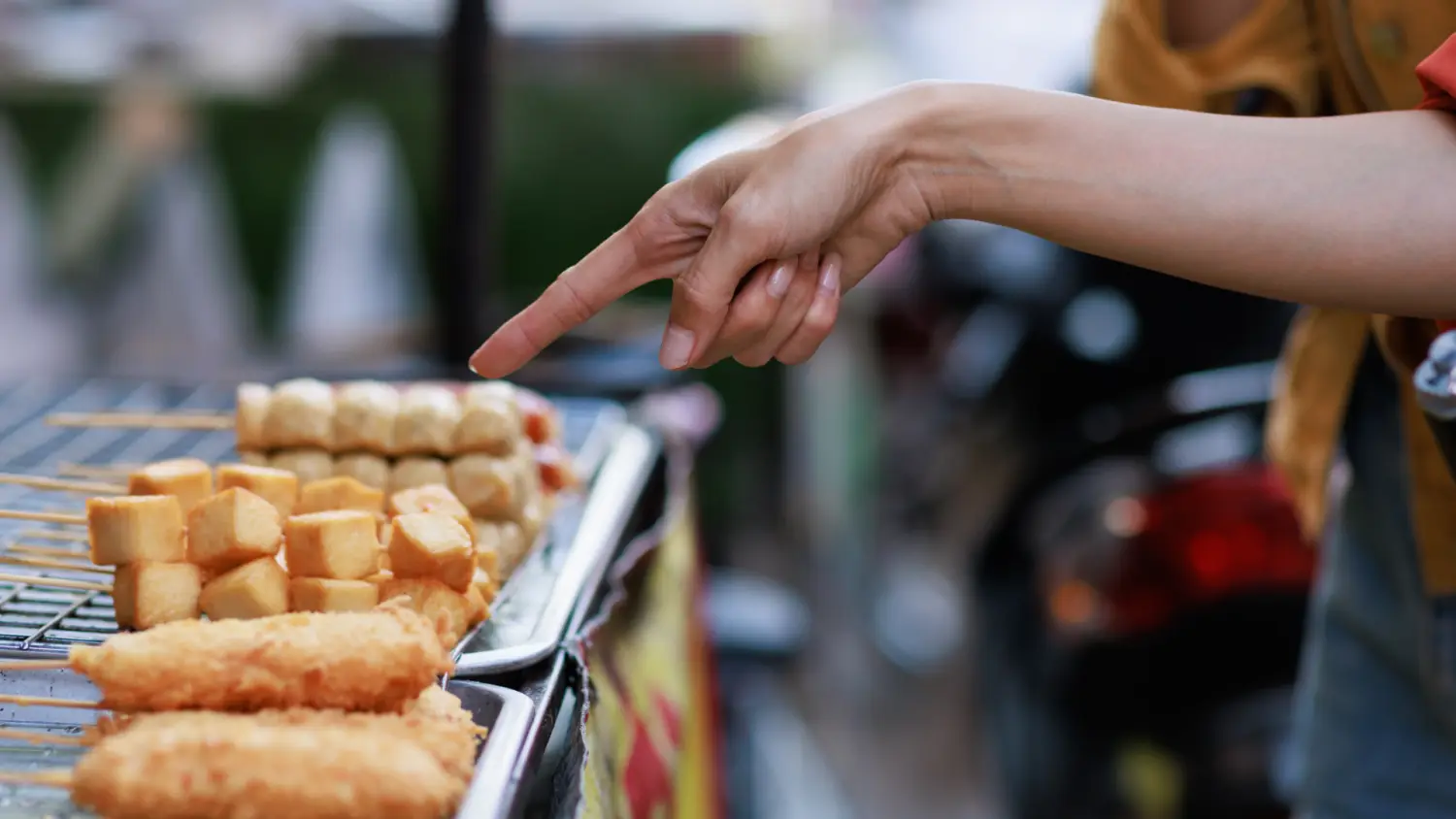
Hawker centers are among the greatest aspects of living in Asia. They offer three things you cannot find in most Western-style restaurants: speed, affordability, social interaction, and great-tasting food.
However, it is not a perfect system. Generally, you do not have control over the kitchen. You cannot choose how the rice is prepared, how much sugar goes into the sauce or even if there is sugar added to the sauce.
The good news is that even with the limited choices at a busy hawker center, small decision-making influences your glucose response.
The Sequencing Rule Still Applies
One of the most basic strategies you can employ is to sequence your meals. Sequencing means the order in which you eat your food.
Starting with vegetables and protein may slow how quickly glucose enters your bloodstream.
Several studies have found consuming protein and dietary fibre before carbohydrate intake tend to result in less pronounced post-meal blood glucose spikes for individuals with and without diabetes. Fibrefunctions as a gentle barrier in your digestive tract, while protein provides a slight slowing effect on digestion.
Regardless of whether you're eating at an Asian hawker center or anywhere else, you can try this strategy.
If you are purchasing mixed rice (cai fan or nasi padang), begin by eating the vegetables and protein first; save the rice until the end.
If you purchase fish soup, eat the fish and vegetables first and then eat the rice or noodles.If you are purchasing Yong Tau Foo, begin by eating the tofu and vegetables, followed by the noodles.
The Buffer Add-On
There are times when a meal is primarily composed of carbohydrates – such as fried noodles, fried rice, roti prata.. Instead of eliminating carbohydrates entirely, you can add a buffer. A buffer is simply adding protein, fibre, or healthy fat to your meal. These items delay digestion and may temper the glucose increase. Protein, fibre, and healthy fat act as "speed bumps" for carbohydrate absorption.
Examples of buffers at the hawker center are:
Add boiled egg and veggies to your noodles
Purchase an extra side of tofu, chicken or fish
Add nuts and Greek yoghurt to oats
Portion Awareness Guide
Many people do not realize that carbohydrate portions in hawker centres are often larger than necessary -- sometimes a single plate contains up to 300grams of cooked rice. This is equivalent to 1.5-2 times a small Chinese bowl of rice.
You do not need to weigh out everything you eat. Simply use the "fist rule." One medium clenchedfist of cooked rice is approximately 150 grams. If your rice serving appears to be equivalent to two or more fists, your blood glucose will likely respond accordingly.
The simplest modification? Request for "less rice/noodles”
Most vendors will accommodate your request. It represents one of the simplest strategies you can make when eating out
Best and Worst Vendors (Glucose-Wise)
While no dish is strictly "off-limits," some meals provide a more gradual glucose response than others.
Here are some examples of dishes that have lower, and higher impact on blood glucose:
Lower Impact Choices
These meals generally combine protein, vegetables, and moderate amounts of carbohydrates.
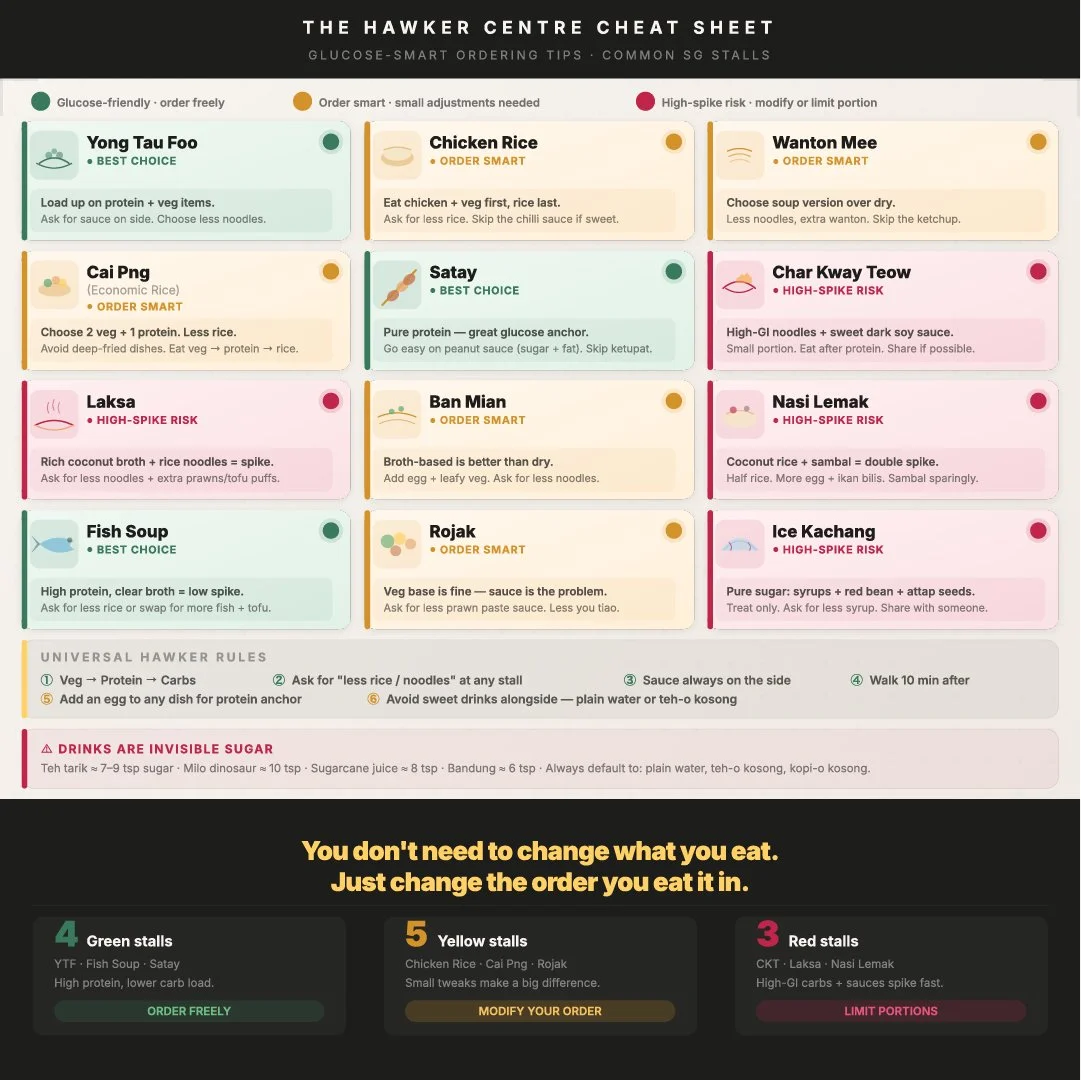
Chicken rice (ask for less rice, order a side of veggies, and eat the chicken and veggies first)
Yong Tau Foo (select more vegetables and tofu, select fewer processed meats like hot dog or crab stick, request clear broth, and limit sauces)
Sliced fish soup (ask for less rice or bee hoon and add extra vegetables)
Salads with protein such as chicken, salmon, egg, or tofu
Grilled satay with cucumber and onions, less peanut sauce
Economic rice or nasi padang (pick at least two vegetable dishes and one or two non-fried proteins, keep rice to about one fist, no additional sauce/gravy
Ban Mian (with additional vegetables, less noodles if necessary)
Higher Impact Choices
These meals tend to have a large amount of refined carbohydrates and oil.
Wanton noodles
Char Kway Teow
Fried Carrot Cake
Fried Rice
Mee Goreng
Roti Prata
You can still enjoy these foods occasionally as part of a balanced diet, as long as portion sizes and frequency is controlled.
Drink Traps
There is a surprise here. At many hawker centers, the largest glucose spike does not come from the food. It comes from the beverage.
Bubble tea, canned drinks, sugarcane juice, and sweetened tea/coffee all contain high amounts of rapidly absorbed sugar. Since liquids undergo nearly no digestion, the sugar in these beverages will enter your bloodstream more quickly than the sugar in rice.
Better drink options include:
Unsweetened tea
Black coffee/tea without sugar/condensed milk
Sparkling water
Water with lime
Unsweetened barley drink
If you desire to consume sweet beverages, try to reduce the amount of sugar gradually. Go from full sugar to half sugar and finally no sugar
The Social Meal Strategy
Hawker food is social. It’s where people gather, talk, and relax over a shared meal.
Metabolic health should support that and not make things complicated. The good news is that many small habits are subtle and easy to include, like starting a meal with vegetables, adding protein such as tofu or eggs, or being mindful of portion sizes. These healthy habits help support stable blood sugar without disrupting your daily routine or social events.