60+ names for sugar, and they’re all hiding on the back of the packet
Turn a packet around. The real story is not on the front, it’s on the back. And that’s where your glucose story begins.
Food labels can feel confusing at first. But once you know what to look for, you may be able to scan one in 30 seconds.
The Sugar Name Game
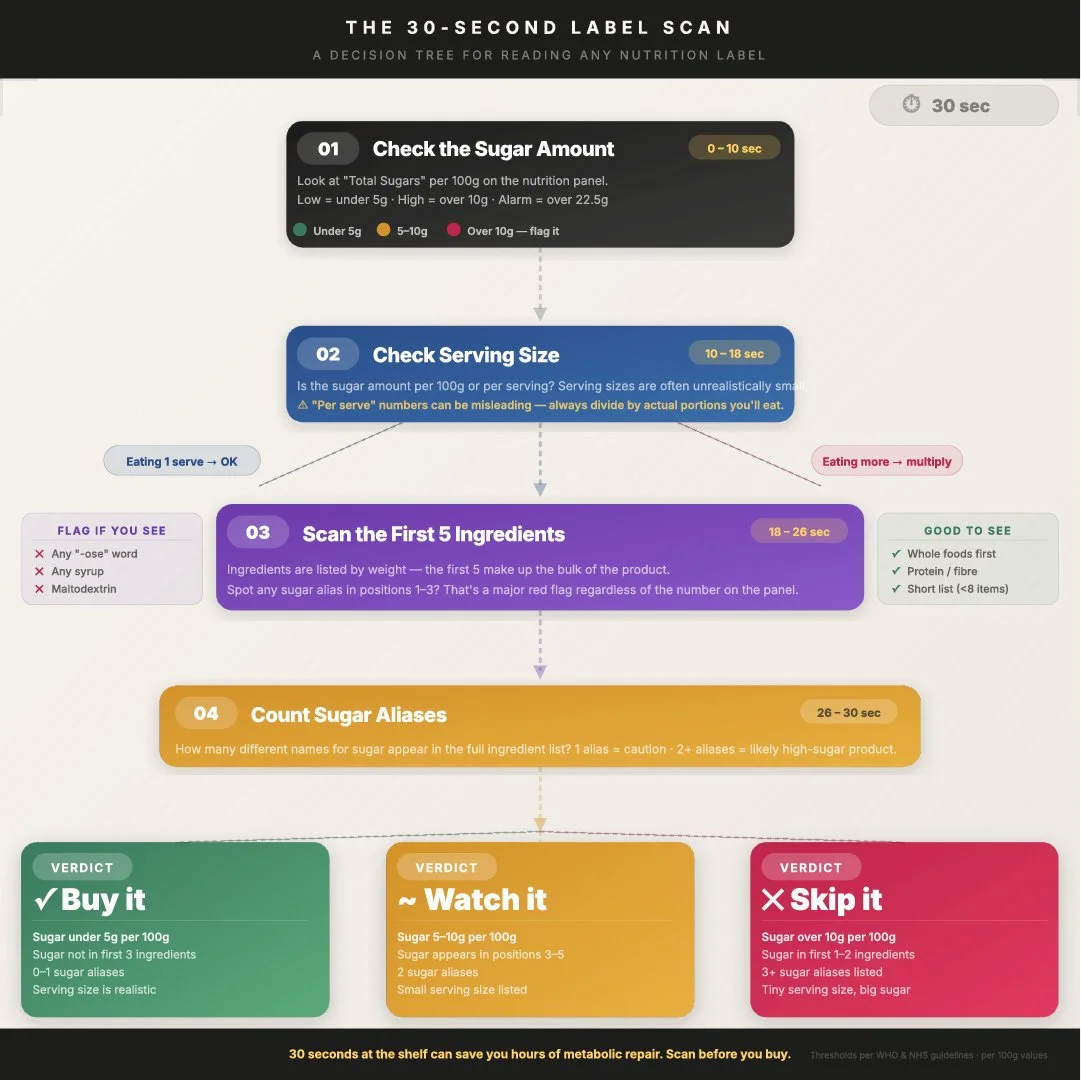
Sugar isn’t always labelled as ‘sugar’. By using different names, a manufacturer can hide sugar throughout the ingredients list. Therefore, it won't show up as a dominant ingredient.
Common names include:
Sucrose (table sugar)
Glucose (simple sugar absorbed rapidly into your bloodstream)
Fructose (sugar found in fruits)
Maltose (a type of sugar derived from grains)
Dextrose (form of glucose)
Rice syrup
Agave nectar
Barley malt
Coconut sugar
Cane juice
All of these have the same effect on your blood sugar level as table sugar.
Ingredients are listed by their weight, from greatest to the least. Therefore, if any of the above are among the first 5 ingredients, there is likely a significant amount of sugar in that food.
The 30-Second Label Scan
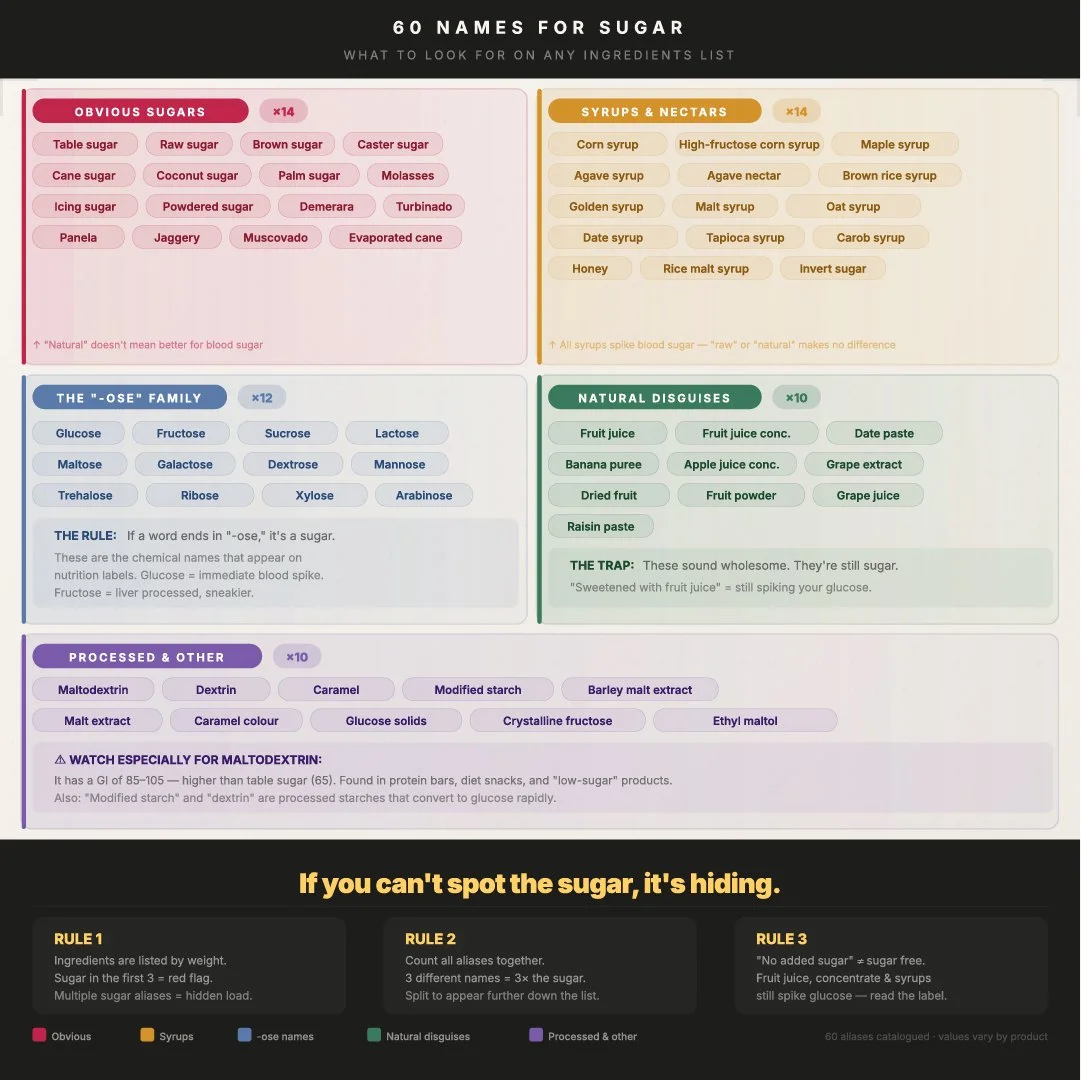
You do not have to read everything. Simply complete the following 3 quick steps.
Step 1: Look at total sugar
Check the total sugar per serving on the nutritional information panel. This indicates the amount of sugar in a single serving.
Step 2: Check the serving size
This is where things get complicated. For example, a bottle of tea may list one serving as half the bottle, but if you drink the entire bottle, you are consuming twice the sugar listed per serving. Always check the serving size and compare it to how much you actually consume.
Step 3: Look at the first 5 ingredients
Look at the ingredient list. If you find any form of sugar (e.g., sucrose, high-fructose corn syrup, agave nectar) in the first few ingredients, it is likely that the product contains a substantial amount of sugar.
The "Health Halo" Trap
On occasion, a product may appear healthy on the front of the package. However, it reveals an entirely different story on the back. This phenomenon is referred to as a ‘health halo’. In essence, a product receives a health-related halo due to marketing and not due to its actual nutritional content.
Examples of such products could be:
Granola bars
Flavoured yoghurt
Dried fruits
‘Whole grain’ cereals
Vitamin-infused drinks
Smoothie bowls
‘Protein’ energy bars containing high amounts of sugar
Bottled fruit juices
Even though a bottle may state claims like “100% natural”, “high protein”, “high fibre” or “low carb”, this does not always mean that the product is suitable for your health goals. These products could still contain a high amount of sugar.
The front of the packaging sells the idea but the back shows what’s in it.
Carbohydrates vs Sugar: What Matters Most
Now we come down to the basic question: Which number should you concentrate on?
Let’s start by understanding carbohydrates. Carbohydrates are a macronutrient group that includes sugars, starches, and fibre.
However, carbohydrate labeling can vary. In Singapore, the Nutrition Information Panel (NIP) lists ‘carbohydrate’ without fibre included. In some foreign imports, particularly those from the United States, ‘total carbohydrates’ include fibre. Hence, numbers may not always be directly comparable.
Here's a simple breakdown:
Total carbohydrate: All types of carbohydrates including added sugar and natural sources of carbohydrates
Dietary fibre: Type of carbohydrate that your body cannot completely digest, but provides many health benefits
Total sugar: All types of sugar, whether natural or added
Added sugar: Sugars added during processing
With regards to managing your glucose levels, total carbohydrates matter most. Once you've established how much carbohydrates you plan on consuming, examine the added sugars for additional insight. For instance, plain yoghurt contains natural sugar from lactose, which is naturally found in milk. Meanwhile, flavoured yoghurt typically contains added sugar in addition to the lactose.
Both fall into the same category; however, the impact on your glucose levels are different.
APAC Labels and Real Life
Some countries attempt to make labels simpler.
In Singapore, beverage manufacturers use the Nutri-Grade system, ranging from A to D.
A and B = Lower sugar options
C and D = Higher sugar options
Malaysia uses the Healthier Choice Logo, which identifies products that meet specific nutrition standards.
While these shortcuts are helpful, they are not foolproof. Check your country’s official nutrition recommendations to understand what these labels mean.
In addition, not all food comes with a label. Take for example hawker meals and home cooked meals – congee, noodles, roti prata. These don’t come with nutritional labels For these meals, remember the basic principle of having a controlled portion of wholegrain carbohydrates, paired with sufficient lean protein and fibre. Be mindful that there may be hidden sugars in dishes, such as sweet sauces, fried coatings and dressings. Limit these extras if possible, and focus on the main components - wholegrain carbohydrates, lean protein, and fibre-rich foods.