
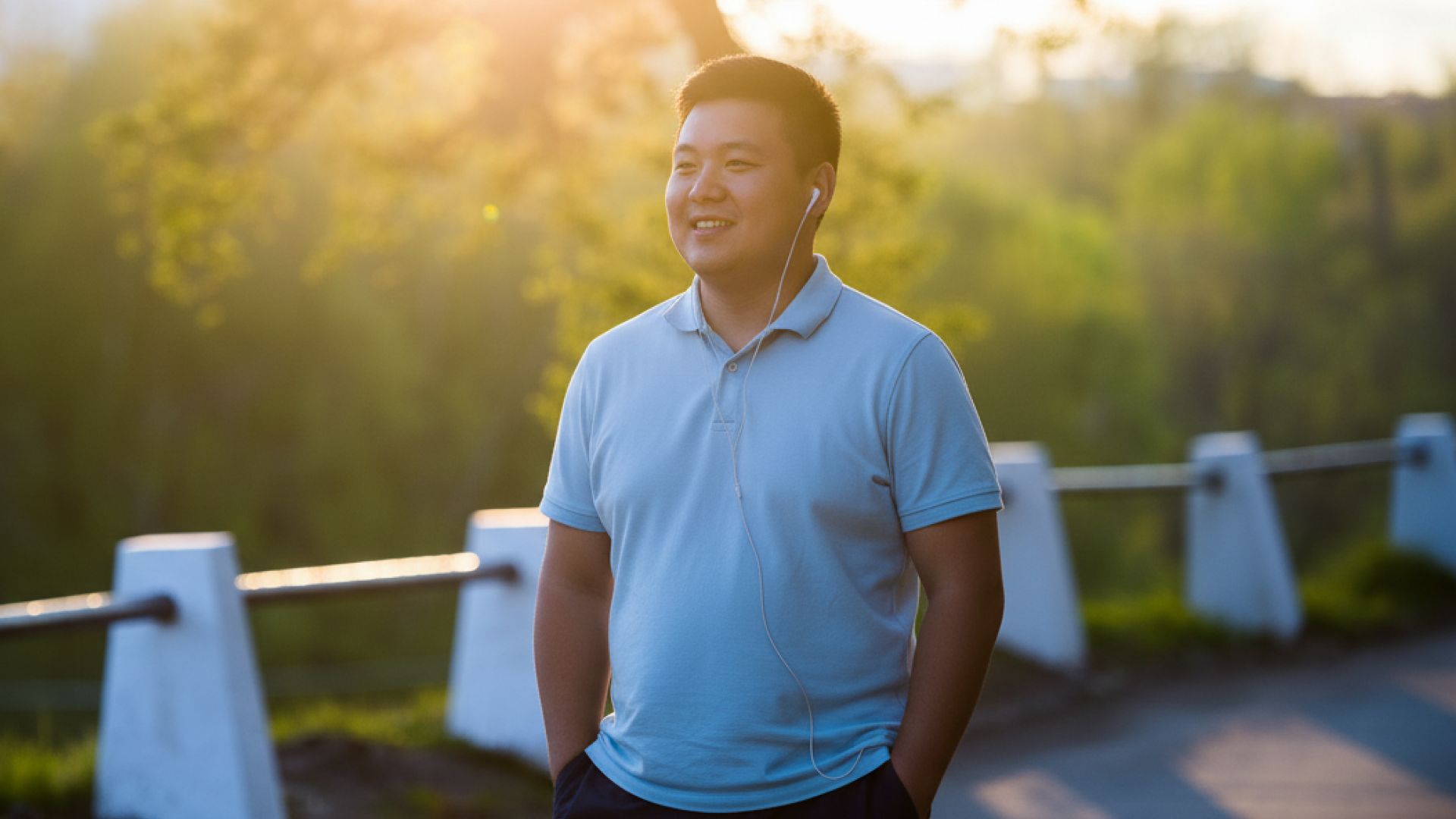
The cheapest, simplest metabolic tool you already own: your legs
A meal containing carbohydrates (even healthy ones) can cause your blood sugar to rise, especially if you’re experiencing insulin resistance. But there’s a simple tool that you can use to help counteract this effect: your muscles. Simply taking a walk after you eat can make a difference in your blood sugar levels after your meals.
The reason this works is because muscle cells have a specific way of taking up glucose from the bloodstream, known as the GLUT4 transporter.
The GLUT4 Transporter
Most cells in the body require insulin in order to transport glucose from the blood into the cell. If there’s not enough insulin in the bloodstream, or if the cells aren’t responsive to it (due to insulin resistance), then glucose can’t enter the cells. It remains in the bloodstream, causing a blood sugar spike.
However, the GLUT4 transporter gives muscle cells a “back door” for glucose. This protein is able to transport glucose from the bloodstream into the cell without requiring insulin.
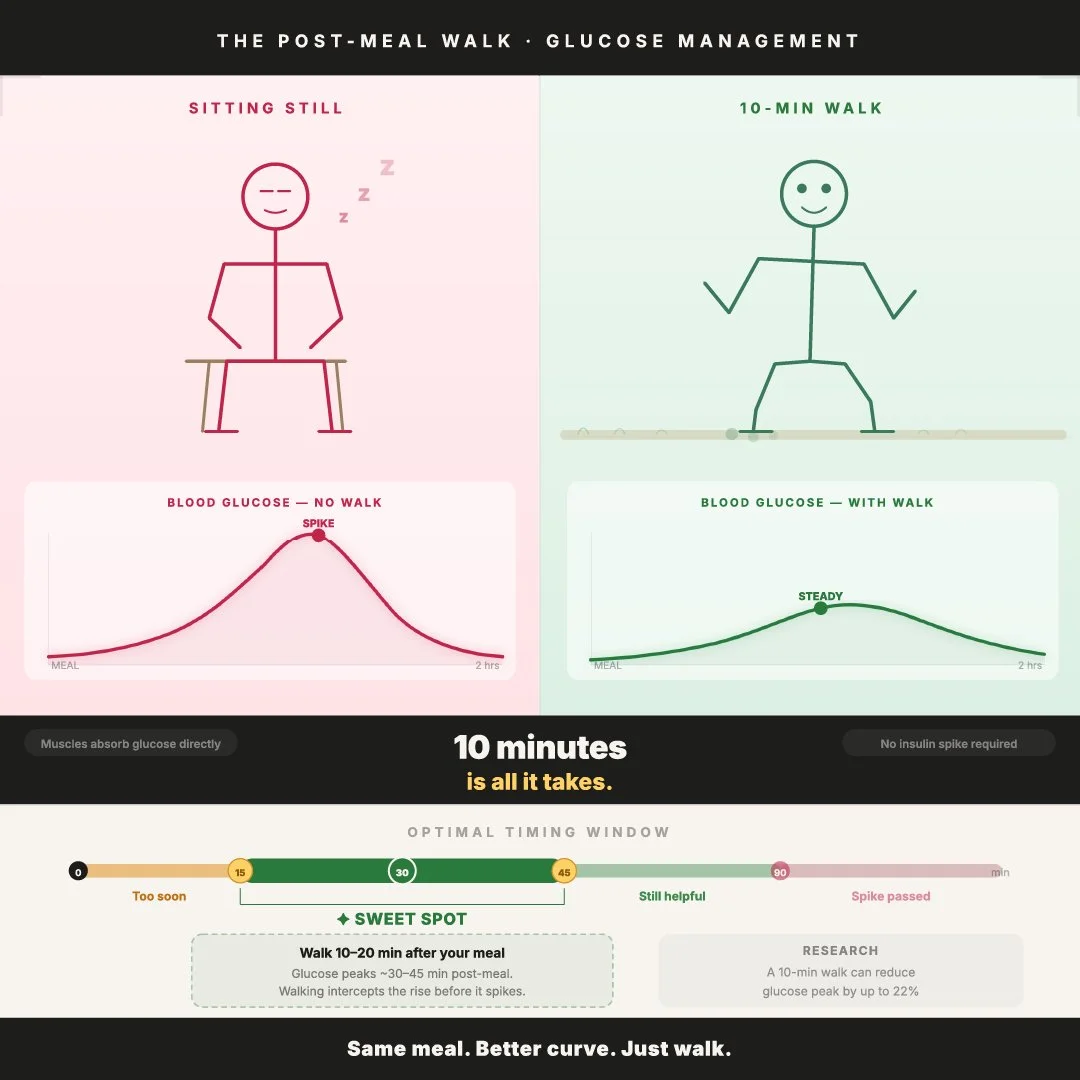
An active muscle cell uses a lot of glucose very quickly, so these cells need a quick way to get glucose from the bloodstream. During muscle activity like walking, the GLUT4 transporter becomes active, acting like “glucose sponges” that soak up the sugar regardless if you’re insulin resistant or not.
The 15 to 30% Rule
Several studies have shown that taking a walk after a meal can reduce the post-meal glucose spike by 15-30%. While this doesn’t mean a walk is a “free pass” to eat a huge amount of simple carbohydrates or refined sugars, it can be a useful way to “flatten the curve” of your blood sugar response.
Always be mindful of what you’re choosing to eat, and think of your post-meal walk as an additional tool to help with blood sugar control.
Timing Matters
To get the most benefit, timing is important. The best time to take a post-meal walk is when your body will be absorbing the carbs from your meal. Because blood sugar levels usually peak about 30 to 90 minutes after eating, the “sweet spot” to start your walk is roughly 15 to 20 minutes after your last bite.
If you walk before your meal, then you won’t get the benefit of soaking up the carbs that you eat. If you wait too long for your walk (for example, walking two hours after your meal), then your blood sugar spike will already have occurred, and the walk won’t have much of an impact.
What Activity Counts?
You don’t need to go to the gym to reap this benefit. The idea is that the more active your muscles are, the more glucose they’ll soak up. Try to use large muscle groups as much as you can during the post-meal window.
For example, brisk walking at a moderate pace, where you can still talk but cannot sing. If you climb some stairs during that walk, that’s even better because you’ll need to use more muscles.
That said, any activity is better than none. Even a slow stroll after a meal will help. Standing and doing the dishes is still better than staying seated. If you aren’t able to manage a brisk walk, add in other forms of activity if you can.
Not About Burning Calories
Many people think of exercise as a way to burn calories and cause weight loss, and it’s true that weight loss can be helpful for those experiencing insulin resistance.
But the post-meal walk really isn’t about weight loss or burning calories. In fact, the number of calories you burn during a 10-minute walk is fairly small – only about 30 to 50 calories. If you just focus on just the caloric burn, the post-meal walk wouldn’t seem worthwhile.
Instead, look at it from a metabolic infrastructure perspective. You aren’t just burning calories off a meal; you are optimizing how your body processes its fuel, and reducing the impact of having higher blood sugar levels after a meal.
What You Can Do Today
If you can’t walk after every meal, try taking a walk after your largest meal every day. That can help to reduce your largest glucose spike of the day by 15 to 30%.
If you can share the walk with your family, friends, or coworkers, you can get the benefits of social time along with the metabolic health benefits of a post-meal walk.