

Proper sleep is the ‘invisible’ pillar of metabolic health
Almost every aspect of your lifestyle can impact your blood glucose levels. One factor that’s often overlooked is sleep.
Yes, the amount and quality of your sleep can have a significant impact on your blood sugar.
Why? Sleep is important for regulation of the levels of various hormones related to food intake and glucose processing. A lack of sleep impacts the body’s hormone responses in several different ways.
The Insulin Resistance Effect
Insulin is needed for almost every cell in the body to take up glucose from the blood.
Insulin resistance occurs when cells become less responsive to insulin. As the cells take up less glucose, it remains behind in the bloodstream, causing high blood sugar levels.
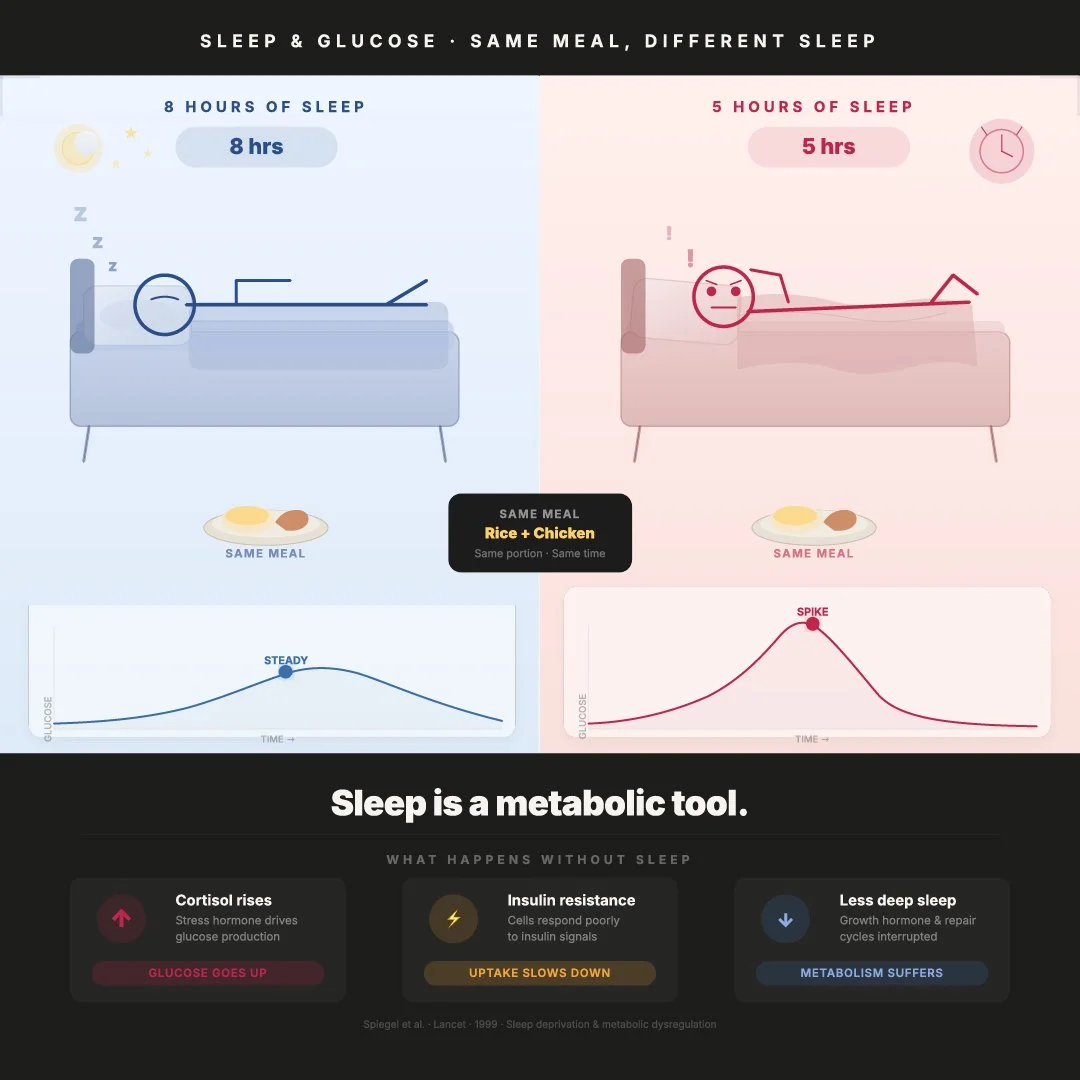
Studies have suggested that even one night of sleep loss can increase insulin resistance by 20-30%. That means that the exact same meal may produce a significantly larger glucose spike when you haven’t slept well on the previous night, compared to when you’ve gotten more sleep.
Research has found that the body can recover from a single night of poor sleep, with insulin sensitivity returning to baseline after sleeping well. However, if lack of sleep is a chronic issue, this can significantly impact your metabolic health over time.
Cortisol and the Dawn Effect
When you haven’t slept enough or haven’t gotten good-quality sleep, this raises your level of cortisol, which is a stress hormone. In general, cortisol prepares the body to deal with a threat, so it triggers the mobilization of energy stores.
The liver normally stores extra glucose in the form of a starch called glycogen. Cortisol causes the liver to convert glycogen back into glucose and release it into the bloodstream.
This is why some users see elevated fasting glucose after a bad night’s sleep. Under the influence of cortisol, the liver releases glucose, so your blood sugar rises even though you haven’t eaten for many hours.
Ghrelin, Leptin, and Cravings
Poor sleep also affects the levels of hormones related to food intake. Sleep deprivation can increase levels of ghrelin, a hormone that makes you feel hungry, while decreasing the levels of leptin, a hormone that makes you feel full.
The result is that when you haven’t slept well, you tend to feel hungrier the next day. When you eat, it’s also harder for you to feel full, so your meals tend to be larger. The extra food intake can increase your blood sugar.
In addition, a lack of sleep has been found to change activity in brain regions related to motivation and desire, leading to increased cravings for sugary and fatty foods. It may be harder to resist sweet treats, even though you know that they’ll increase your glucose levels.
The CGM Pattern
If you use a CGM, you may be able to see a reflection of your sleep in your glucose levels. If you don’t sleep enough or aren’t able to sleep well, then you may observe:
Higher fasting glucose in the morning
Larger spikes after meals
Slower return to baseline glucose levels after meals
More volatile glucose levels throughout the day
If you notice that your glucose looks worse than usual on a particular day, consider how you slept the night before. When you notice increased glucose levels, it’s easy to blame the foods that you’re eating, but it’s also important to consider factors like sleep that can significantly impact glucose levels independent of what you’ve eaten.
What You Can Do Today
The modern world isn’t set up to support good sleep. It’s common for people to find themselves lying awake in bed, unable to get to sleep. Following a few sleep hygiene practices, such as keeping a consistent sleep schedule and avoiding screens near bedtime, can be helpful for many people.
You may not always have control over your schedule. Many people in APAC countries work long hours, and it may not be realistic to get to sleep earlier. Our late-night supper culture can also make it more challenging to get to bed on time, especially because most people don’t want to sacrifice meal time with their family.
Even if you’re not able to increase your sleep, knowing how sleep affects glucose can help you to interpret the data from your CGM and have a better perspective on all the factors that can impact your glucose levels. It may also provide motivation to try your best to increase your sleep, since even a small increase in sleep could have significant metabolic health benefits.