How alcohol influences your blood sugar levels
How many times have you checked your blood sugar after a drink and thought to yourself, “That doesn't make any sense"?
Maybe your glucose dipped, then a few hours later, it climbed. You didn’t eat dessert. You only had a drink.
Your body is not malfunctioning. Alcohol works differently than almost all other foods, and therefore your body responds to it differently.
In order to understand why, you'll need to understand your liver.
The Liver Priority Problem
The liver acts as your body's metabolic control center. One of its regular jobs is releasing small amounts of glucose into the bloodstream between meals. This is referred to as ‘hepatic (meaning: related to the liver) glucose output’.
When you are not eating, this slow glucose release helps keep your energy steady. But once you've consumed alcohol, your liver's priority list changes. The liver sees alcohol as a toxin and prioritises breaking down the alcohol first. This reduces its ability to produce new glucose, so blood sugar can drop.
Later on, blood sugar patterns can shift
If the drink contains carbohydrates (e.g., beer, sweet cocktails) or if you eat while drinking, blood glucose may rise after consuming the drink. This is why some people who consume alcohol may experience unusual patterns in their blood sugar readings.
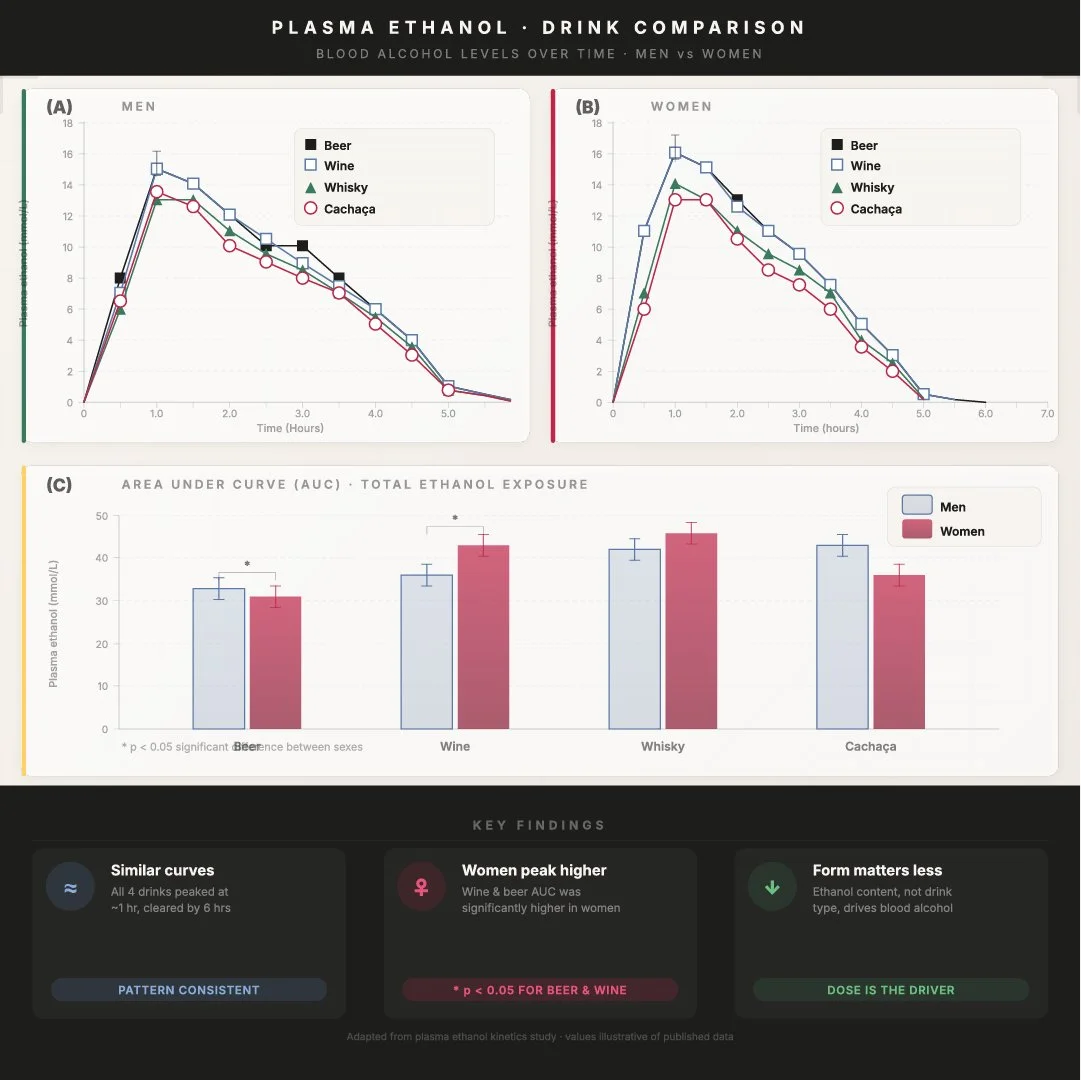
Beer, Wine, and Spirits: Not All Drinks Behave the Same
Drinks differ in terms of how much they influence your blood sugar.
Beer
Beer can cause a quick rise in blood sugar because it contains maltose from fermented grains, which is quickly broken down into glucose.A pint of beer at a bar may behave similarly to a fast-digesting carbohydrate.
Wine
Dry wine generally contains much less sugar than beer because most of the natural grape sugars are fermented into alcohol, leaving little residual sugar.
In contrast, sweet wines (e.g. dessert wines) contain more residual sugar and are more likely to raise blood sugar to a greater extent.
Spirits
Spirits such as whiskey, gin or vodka contain negligible amounts of sugar on their own. Most of the time, a neat spirit or a spirit combined with soda water will have minimal immediate impacts on your blood sugar levels.
However, adding mixers like cola, tonic water, fruit juice, or sweet syrups can significantly increase the sugar content, leading to a rise in blood sugar levels.
The Sleep Connection
Your blood sugar can also be affected the next day after drinking alcohol. Alcohol initially has a sedative effect, which can make you feel sleepy, but excessive intake is associated with poorer sleep quality, reduced sleep duration, and more frequent sleep disturbances.
Poor sleep is associated with higher levels of stress hormones like cortisol and reduced insulin sensitivity, meaning your body becomes less effective at managing blood sugar. As a result, some people may notice higher or more variable blood sugar levels the next day.
Appetite and Decision Making
Alcohol can increase hunger and weaken self-control, making you more likely to crave discretionary tasty foods like instant noodles or fried snacks. When these are combined with sugary drinks or mixers, the higher carbohydrate load can lead to a bigger rise in blood sugar.
Practical Guidelines
If you decide to drink, here are some guidelines to consider:
Women: No more than 1 standard drink per day
Men: Up to 2 standard drinks per day
Additional suggestions to help limit glucose variability:
Opt for dry wine or spirits with soda water rather than sweetened mixers.
Consume a protein-rich meal prior to drinking. Protein tends to slow down the rate at which alcohol is absorbed by the body.
Drink water in between sips of alcoholic drinks, and stay adequately hydrated.Alcohol is a diuretic, meaning it promotes the elimination of fluids via urination.
Pace your drinking and avoid bingeing, as slower intake gives your body more time to process the alcohol
For individuals on insulin or sulphonylureas: Eat a balanced meal that includes carbohydrates when drinking alcohol to help prevent low blood sugar, and check your glucose frequently during and after drinking
Consult your healthcare provider about your drinking habits for personalized advice on how to drink safely and manage your blood sugar.