The macronutrient that does everything: satiety, stability, and strength
Macronutrients are the three main classes of nutrients in food – carbohydrates (“carbs”), protein, and fats. Of these, carbohydrates have the largest impact on blood glucose levels, but protein can also influence blood sugar in several ways.
Protein and Glucose Stability
The building blocks of carbohydrates are sugars, and so carbohydrates directly increase blood sugar levels when they’re digested. By contrast, the building blocks of protein are amino acids rather than sugars, so the digestion of protein has minimal direct impact on blood sugar levels.
Protein also has indirect effects that help with blood sugar control. One effect of protein is to slow down the emptying of the stomach. This causes carbohydrates eaten at the same meal to enter the bloodstream more gradually instead of all at once, so they’re less likely to spike blood sugar.
In addition, protein stimulates the secretion of glucagon-like peptide-1 (GLP-1), a hormone that’s produced after a meal. GLP-1 further slows down the emptying of the stomach and promotes feelings of fullness.
GLP-1 also helps stimulate insulin secretion. Insulin then signals tissues such as muscle and fat to take up glucose, helping prevent excessive rises in blood sugar.
Because of these downstream effects, eating protein with carbohydrates can help moderate the rise in blood glucose after a meal.
The Thermic Effect
Protein is also the most “metabolically expensive” macronutrient, which means that it takes the most energy to digest. Studies have found that 20-30% of the calories contained in protein are used to digest it. By contrast, digestion of carbohydrates requires 5-10% of their calories, and digestion of fat takes just 0-3%.
Because the body uses more calories for digestion of protein, a slightly smaller proportion of the calories from protein contributes to net energy compared with carbohydrates or fat, which supports weight management.
Satiety
Protein is also known to be the most satiating macronutrient, which means that it promotes feelings of fullness. A high-protein meal reduces the level of ghrelin, a hormone that makes you feel hungry, and it remains elevated for hours after the meal. It also increases the levels of peptide YY (PYY), a hormone that makes you feel full.
When you eat a protein-rich meal, you’ll get full more quickly and will stay full for longer, compared to when you eat meals that contain more carbs.
How Much Protein Do You Need?
The Singapore Health Promotion Board generally recommends that adults aged 18 to 49 consume 0.8g of protein per kg of body weight each day. Those aged 50 and older should aim for 1.2g of protein per kg of body weight per day.
Those who are working to build their muscle mass or lose weight should aim for higher protein intakes, between 1.2 and 2.2g of protein per kg of body weight per day. For personalized advice, consult a dietitian. People with kidney disease should avoid high protein intakes..
Try to distribute your protein across the day. Instead of having just one protein-heavy meal and eating a lot of carbs at other meals, eat some protein at each meal. This will help with blood sugar stability and satiety throughout the day.
APAC Protein Sources
It’s best to focus on getting your protein from whole foods first, before turning to supplements such as protein powders.
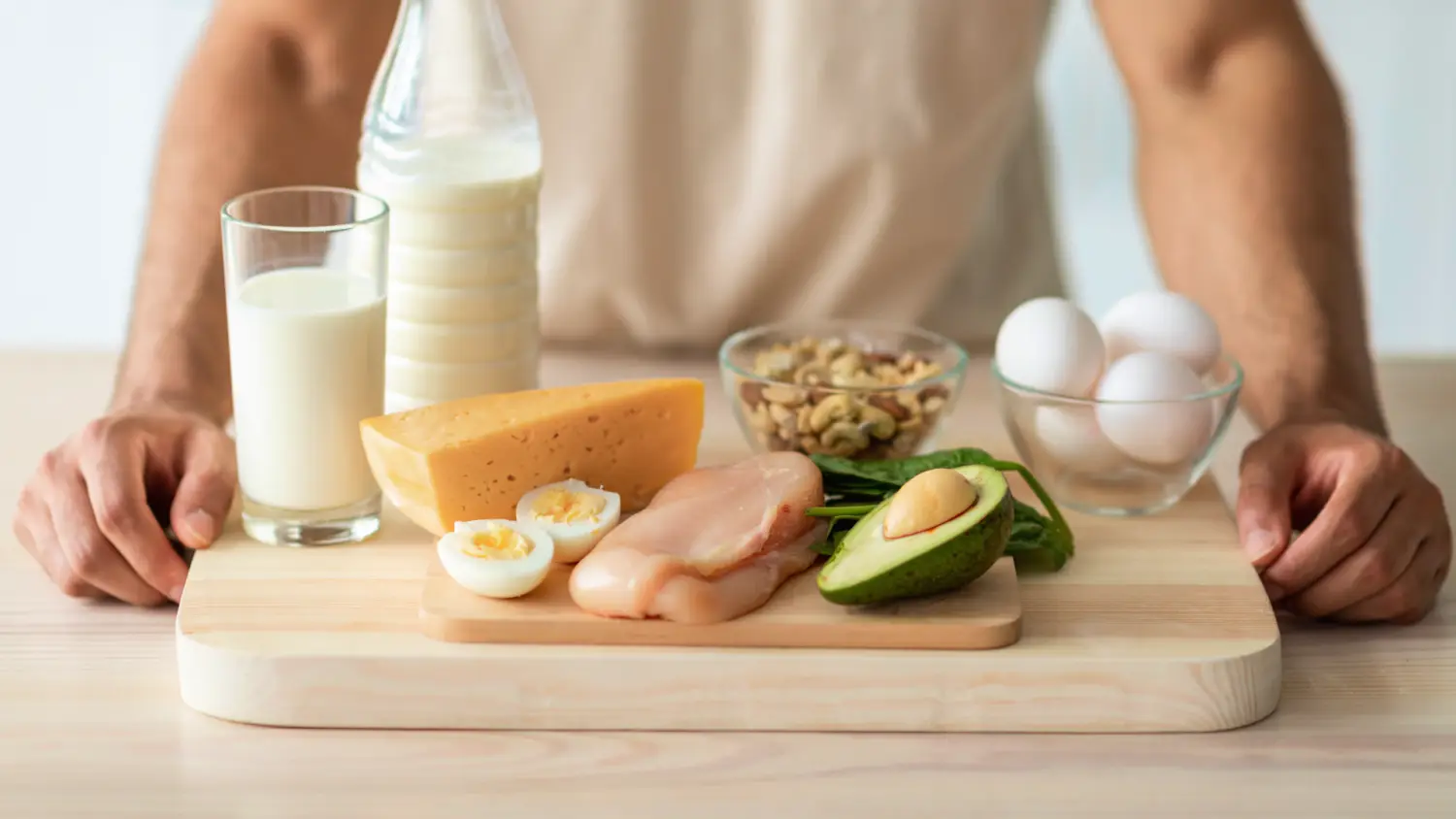
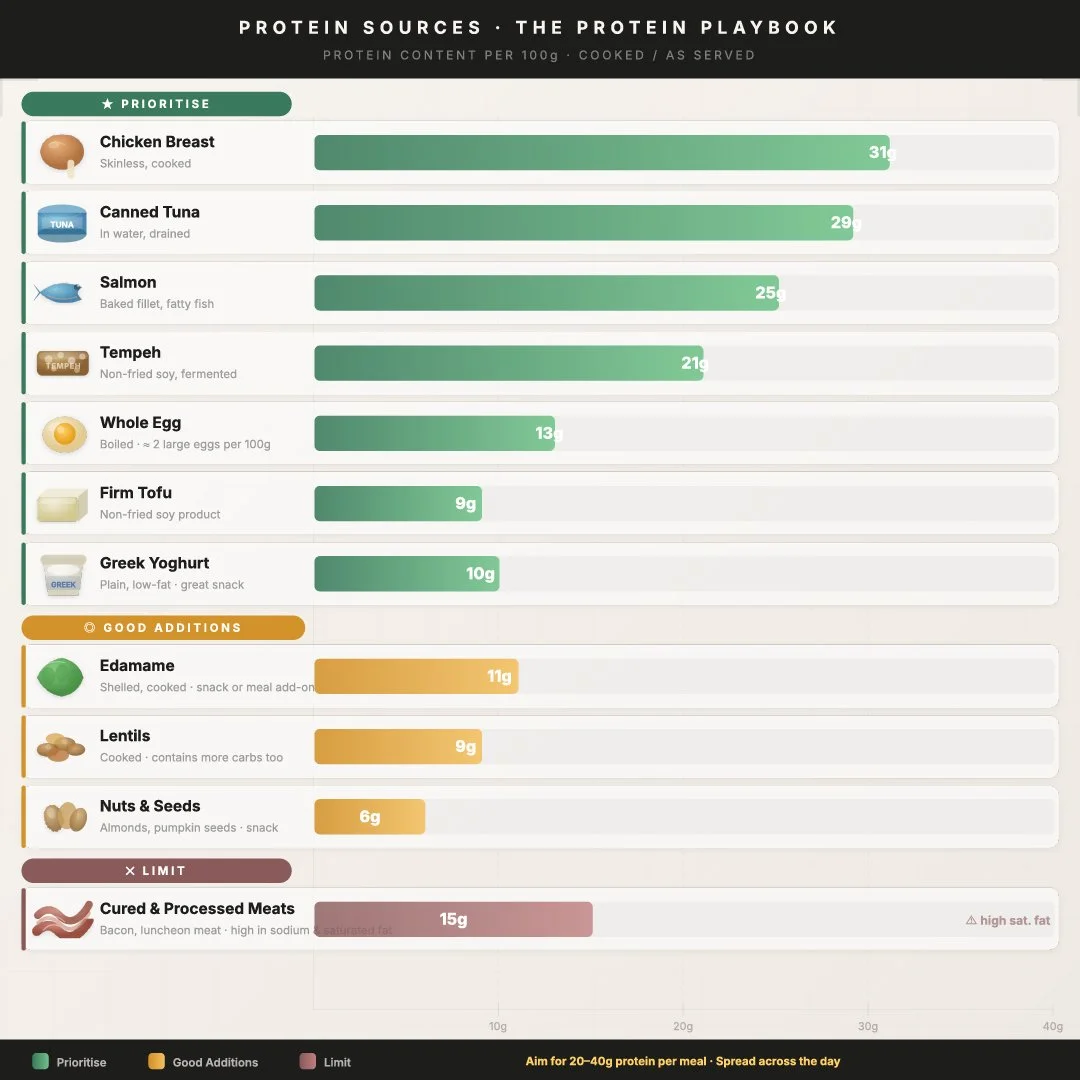
Prioritize lean, high quality protein sources such as eggs, lean animal proteins, non-fried soy products (such as tofu and tempeh), fatty fish, and low-fat dairy products. Aim to build each main meal around these foods
Some plant proteins, like legumes, nuts and seeds, are still nutritious, but they generally contain less protein and more carbohydrates.. These foods can still make good snacks or additions to a meal, but may not be ideal as a main protein source.
Some foods do provide protein but also contain substances that may be harmful in excess. These include highly processed foods, like cured meats, bacon, and luncheon meats, as well as foods that are high in saturated fat or trans fats, like fried meats, nuggets, or fatty meats. It’s best to enjoy these in moderation rather than as your main protein source.
Many traditional APAC dishes contain a substantial amount of carbs. You don’t have to give up these foods or completely change your diet to get more protein. Instead, you can simply add some extra protein to the dishes you already love. For example, you could add some extra chicken to your fried rice, or add tofu or eggs in your congee. For snacks, edamame or plain low fat Greek yoghurts are great choices.
What You Can Do Today
Your breakfast sets the metabolic tone for the rest of the day. Studies have shown that eating a high-protein breakfast leads to a lower glucose level at dinner time. The ability of protein at one meal to impact glucose responses at a later meal is known as the “second meal effect.”
Many common breakfast foods, such as congee, cereal, and toast, are almost entirely made up of carbs, with minimal protein. Instead of eating mostly carbs at breakfast, you could try having eggs, sliced beef or chicken, low-fat yogurt, or a protein smoothie. Starting the day with 20-30g of protein allows you to take advantage of the second meal effect to improve your glucose.