

Your body can spike your glucose without you eating a single thing
Stress impacts many aspects of your physiology. That includes your blood glucose.
When you’re stressed, you may notice that your blood sugar spikes, though you haven’t eaten anything.
This happens because of the physiological responses that stress triggers throughout the body. When you’re feeling stressed, this causes hormonal changes that affect how your body processes glucose.
The Cortisol-Glucose Connection
When you encounter a stressful situation, stress hormones are released from the adrenal glands. Adrenaline and noradrenaline are fast-acting but disappear relatively quickly. Cortisol lasts a little longer – it peaks in about 15-20 minutes, and then takes about an hour for levels to return to baseline.
One of the effects of these stress hormones is to mobilize the body’s energy stores.
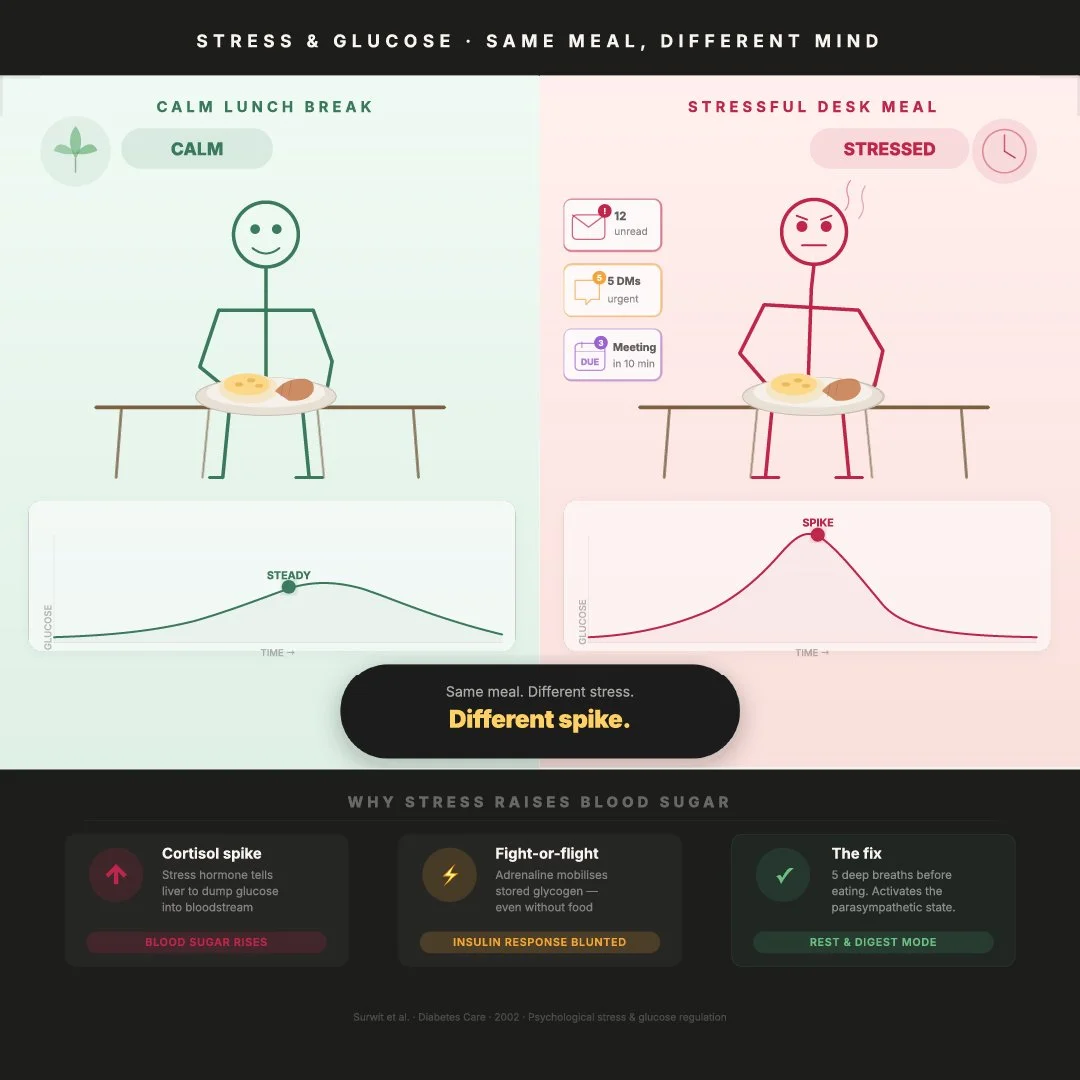
Cortisol is part of the body’s natural stress response and helps make energy available when needed. It signals the liver to release glucose into the bloodstream, providing readily available energy in stressful situations.
Because of this normal physiological response, blood glucose can sometimes rise during stress even if you haven’t eaten recently.
Cortisol can also temporarily make some cells (particularly fat tissue and muscle cells) respond less effectively to insulin, increasing insulin resistance. This means less glucose is taken out of the blood by certain tissues, which maintains higher circulating glucose levels.
In situations of acute stress, this response ensures that sufficient glucose is available for energy demands, including skeletal muscle activity, to help us to “fight or flight”.
However, when cortisol levels remain chronically elevated, this reduced insulin sensitivity can lead to higher long-term blood glucose levels, which is harmful to our bodies.
Acute vs. Chronic Stress
Whether or not stress is harmful to your long-term health depends on what type of stress you’re experiencing. There are two major types of stress, known as acute stress and chronic stress.
When you experience a short-term stressful event, this is known as acute stress. For example, if you hear a sudden loud noise in your home, you’ll experience an acute stress response. The body is able to recover from acute stress, and as long as it doesn’t happen too frequently, this type of stress is generally not harmful to health. In fact, exercise – which we know to be very good for long-term health – is a type of acute stress.
However, in the modern world, many people experience ongoing stress that never really ends. Common examples include work stress, financial worry, or concerns about the state of the world. Ongoing, long-term stress like this is known as chronic stress. When you’re in a state of chronic stress, cortisol and other stress hormones stay elevated for a long time, instead of spiking and then returning to baseline. The body doesn’t have a chance to recover from the stress response.
Chronic stress can cause damage to the body over time, including changes in blood sugar levels. The constant elevation of cortisol essentially keeps the body in a state of insulin resistance, so glucose is not cleared effectively after meals.
The CGM “Phantom Spike”
You may be able to see the effects of stress in the data from your continuous glucose monitor (CGM). For example, you might see a rise in glucose that doesn’t correlate with any food intake in your food log. This could indicate that you experienced a spike in stress hormones which triggered your liver to release glucose into your bloodstream.
When you’re having a stressful day, you might notice that a particular food spikes your glucose more than it usually would. This is because cortisol temporarily increases insulin resistance, so glucose is not cleared as effectively from your blood.
It’s important to keep the larger picture in mind when you’re interpreting your CGM data. The explanation for a glucose spike isn’t solely caused by food. When you see a spike, think about how you were feeling – not just what you were eating.
What You Can Do Today
Stress is a part of everyone’s life, and it’s not always possible to reduce the amount of stress you experience. Particularly in APAC countries, our work culture demands high performance and long hours, and this isn’t something that you can personally change. You also can’t control what’s happening in the world around you.
What you can change is your nervous system’s response to the situations you encounter. In turn, that will reduce the secretion of cortisol, which can help to keep your blood sugar from rising.
Many research studies have shown that exercise is correlated with lower stress. If you’re in a stressful situation, finding a way to get a little exercise can help. Taking a short walk, even for just a few minutes, can help to calm your nervous system and release stress. Studies have also shown that those who exercise regularly are likely able to better deal with stressful situations.
Besides helping to reduce stress, exercise can also help to manage blood sugar levels. Physical activity triggers muscles to take up glucose even without insulin. This is why walking after a meal is an effective way to help control glucose levels.
Mindfulness meditation, social connection, being in nature, and getting plenty of sleep have all been shown to reduce cortisol levels. These activities help the nervous system to be more resilient, so you experience less of a physiological stress response when confronted with challenging situations.