The order of your fork can influence your blood glucose response
You are not only choosing what to eat. You also influence how your body responds to the carbohydrates in your meal through the sequence in which you eat your food.
Same plate. Same caloric content.
However, eating the same foods in a different order may lead to a different blood glucose response.
The Fibre Shield
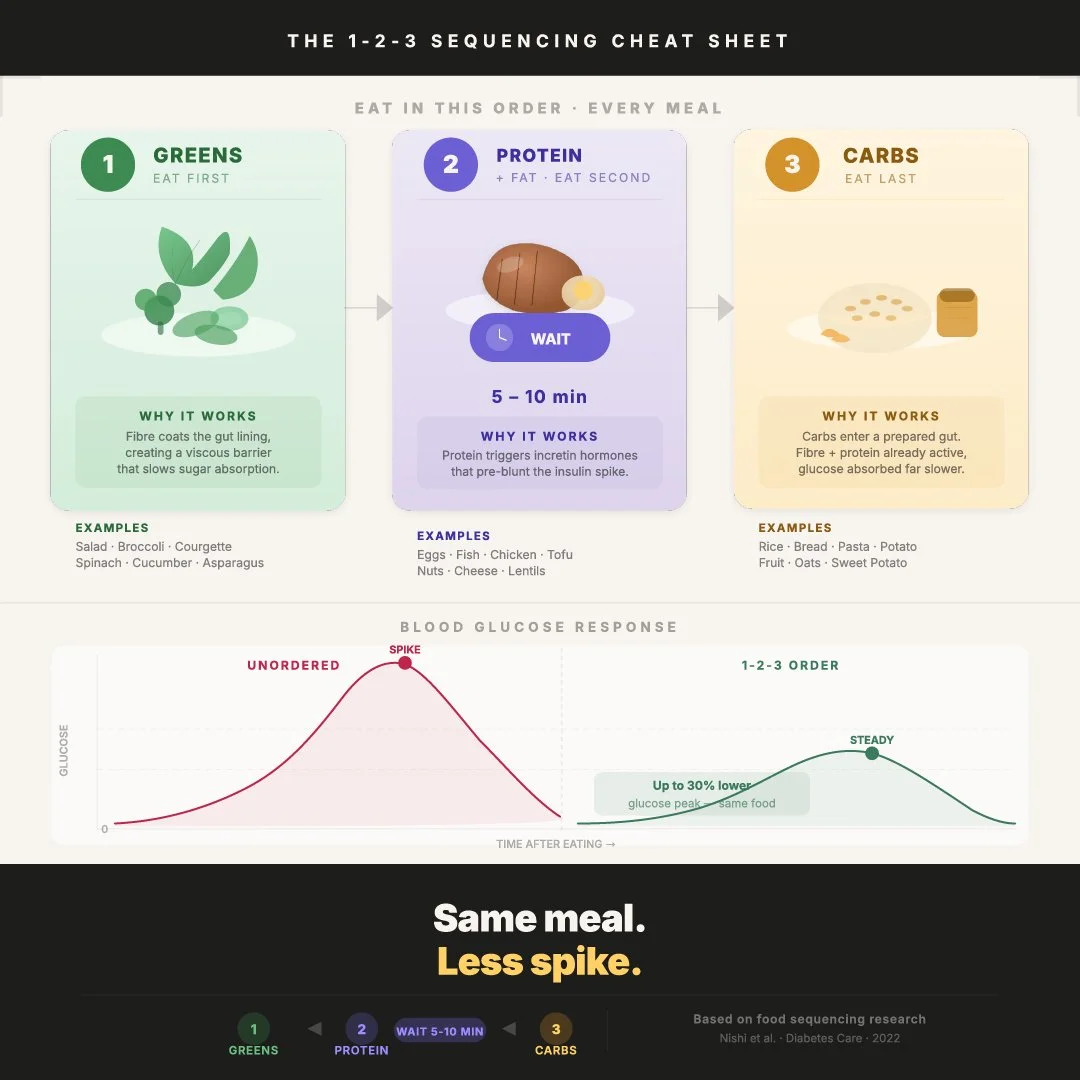
When you consume non-strachy vegetables before other components of your meal (for example, bok choy, spinach, broccoli or a simple salad), something helpful happens in your gut.
Many vegetables contain soluble fibre. When soluble fibre mixes with water during digestion, it forms a vicious, gel-like matrix. This thickens the contents in your stomach and slows the speed at which food moves from the stomach into the small intestine (i.e. gastric emptying).
As a result, the carbohydrates that you eat afterwards are digested and absorbed more slowly, allowing glucose to enter the bloodstream more gradually.
By eating vegetables first, this ‘fibre shield’ is already in place when the carbohydrates arrive, helping your blood sugar rise more steadily.
The GLP-1 Advantage
When you eat vegetables and protein before consuming carbohydrates, your gut begins to release crucial hormones, including glucagon-like peptide-1 (GLP-1) and (glucose-dependent insulinotropic polypeptide (GIP). Hormones are chemical messengers that travel through your bloodstream to various parts of your body telling them to perform specific tasks.
Both GLP-1 and GIP play a key role in regulating blood glucose levels by stimulating insulin release from the pancreas. Additionally, GLP-1 delays gastric emptying, which means food leaves the stomach more slowly. This can reduce how quickly nutrients, including glucose, enter the bloodstream. GLP-1 also helps increase feelings of fullness and may reduce appetite.
This creates a powerful double benefit: a slower glucose rise and improved appetite control before the main carbohydrate portion of the meal.
The 10-Minute Rule
Waiting about 10 minutes between eating vegetables or protein and carbohydrates may help improve your glucose response after a meal.
Start by trying:
Eggs before your toast
A chicken and green salad before pasta
Stir-fried greens, then fish before rice
Tofu or edamame before noodles
You do not need to time it strictly. Even a short pause while chatting, drinking water, or slowing down your meal can also help create this sequence naturally.
The Second Meal Effect
Here’s where it gets interesting.
Some researchers describe a phenomenon called the ‘second meal effect’-. It means that the food that you eat at one meal can affect your blood glucose response at the subsequent meal, even hours later.
For instance, a high-fiber, high-protein lunch may help your body manage the blood glucose rise from a carbohydrate-containing dinner that you eat later that day.
Save Dessert Last
Eating a dessert such as cake, ice cream or pudding between meals may lead to a rapid rise in blood glucose. Having it after a balanced meal can create a different response.
When something sweet is eaten after vegetables, protein, and healthy fats, these earlier foods can slow digestion. As a result, glucose may enter the bloodstream more gradually.However, portion size still matters. It is important to keep the total amount of carbohydrates in the meal about the same. If you plan to have dessert, consider reducing the carbohydrates from other parts of the meal, such as rice, noodles, or potatoes. Adding dessert on top of an already carbohydrate rich meal may raise blood glucose further, as total carbohydrate intake remains one of the strongest influences on blood sugar.
The idea is not to ban dessert, but to sequence it as part of the meal rather than eating it separately, while keeping the overall carbohydrate portion in mind.